
How spin bowlers should use silly mid-on
Learn where silly mid-on stands, what chance the position is meant to catch, when a spinner should ask for it, and how to test it safely in practice.
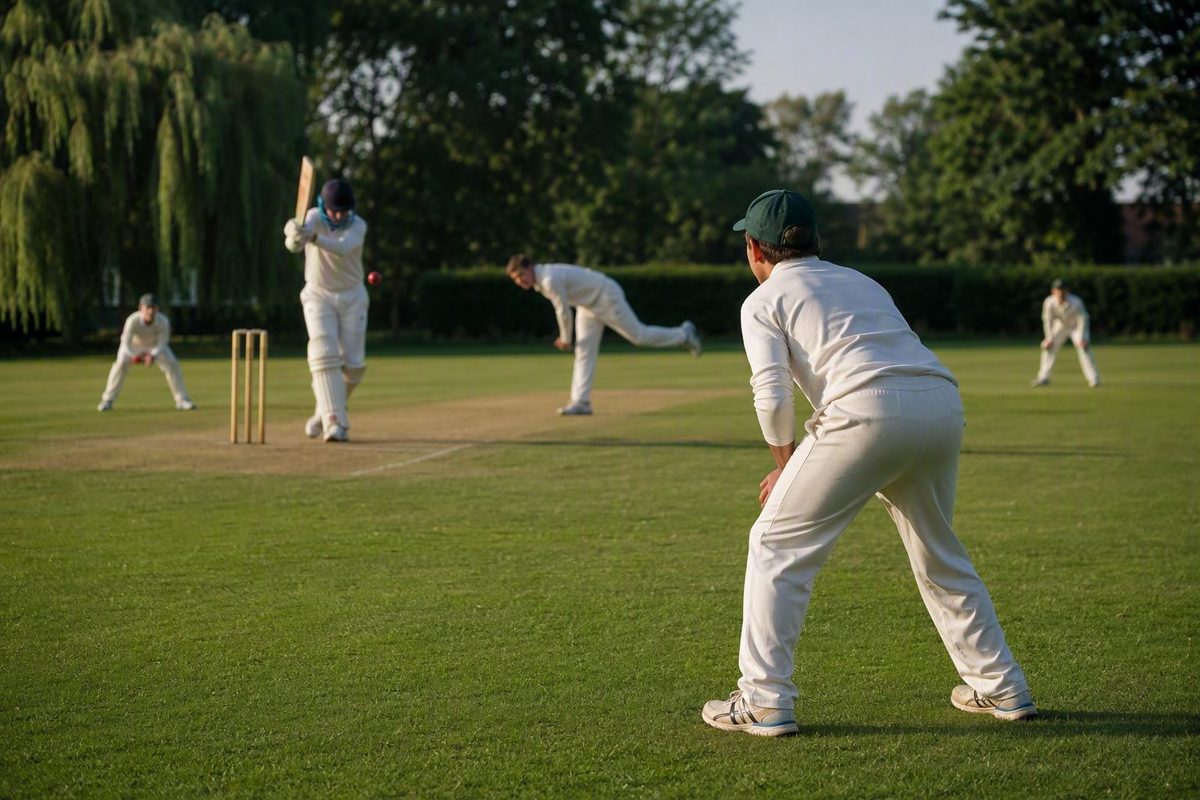
Silly mid-on is a close-catching position on the batter’s leg side, in front of the striker’s wicket. The fielder is much closer than an ordinary mid-on and is there primarily for a misplaced defensive stroke or a ball that loops off the bat. That basic definition is consistent with this cricket glossary’s entry for silly mid-on.
For a right-handed batter, picture a fielder close to the bat on the same side as the batter’s legs and slightly towards the bowler. Reverse the picture for a left-hander. “Silly” means unusually close; it does not set one official distance.
Silly mid-on, short leg and silly mid-off
These positions are easy to confuse:
- Silly mid-on: close, on the leg side and in front of the wicket.
- Short leg: close on the leg side but squarer, alongside the batter rather than as far forward.
- Silly mid-off: the corresponding close position in front of the wicket on the off side.
The exact spot should follow the expected chance. If mistimed defensive shots are dropping straight and just to leg, use silly mid-on. If they are going squarer from bat, pad or glove, short leg may cover the better line. Do not keep the label while placing the fielder somewhere the ball has not been going.
What a spinner is trying to create
Silly mid-on is an attacking fielder, not simply decoration around the bat. The bowler’s plan should connect three things:
- A repeatable ball: usually the stock delivery rather than a new variation.
- A likely response: a forward defence, checked drive or hurried push.
- A catch route: a soft aerial contact in front of the batter on the leg side.
The position is most convincing when you have already seen that route: perhaps the batter is meeting the ball with a firm, angled bat or repeatedly playing before judging the turn. A turning surface can help, but visible evidence from the batter matters more than assuming every spinner deserves a close catcher. If you are still trying to locate your stock ball, work first on a measurable landing area with the spin-bowling accuracy drill.
Do not treat silly mid-on as belonging exclusively to off-spin or leg-spin. The useful question is not the bowler’s label but, “Where are this batter’s false contacts travelling?” Watch four to six deliveries, then ask the captain to move the catcher to that route.
How to place the fielder
Start with the intended catch line, then make the distance safe and realistic for the fielder’s reactions and the match regulations. The fielder should:
- face the striker rather than stand side-on;
- settle before the delivery;
- stay balanced with hands ready rather than resting on the knees;
- expect a low catch, a sharp return catch and an evasive movement on every ball;
- avoid blocking the bowler’s approach or standing on the pitch.
Under MCC Law 28, a fielder may not have any part grounded on or extended over the pitch before the ball reaches, touches or passes the striker. The same law permits only minor stance adjustments by a close fielder before the ball reaches the striker; unfair movement can produce a dead ball and penalty runs. See the MCC’s Law 28 before using planned pre-delivery movement.
One practical cue is “still at release, react after contact.” It gives the bowler a stable target picture and keeps the catcher from guessing across the batter’s sightline.
Safety comes before the attacking field
A hard ball can reach a close catcher almost immediately. Do not improvise this position with an unprotected or unwilling fielder, and check the playing conditions for your competition—especially in junior cricket.
The ECB’s current recreational guidance for England and Wales recommends that an adult wear a helmet with a faceguard or grille when fielding closer than 8 yards (7.3 metres) from the striker. It also says close fielders should consider other suitable protection, including a groin protector and shin pads. The guidance applies to matches and training, while separate mandatory requirements apply to junior players; read the ECB Recreational Cricket Safety Guidelines and your local rules.
For self-coached practice, begin with a tennis ball or suitable soft training ball. A cone can represent silly mid-on while the bowler tests the plan without putting a catcher in danger.
A 24-ball silly mid-on test
Setup: Put down your normal good-length target. Place a cone where a safe silly mid-on would cover the likely catch route. Use a batter playing controlled defensive strokes with a soft ball; alternatively, use a target or rebound net and treat the cone as a virtual fielder.
Ball 1–6: observe. Bowl six stock balls. Record each result as:
L— landed in the target;M— made the batter play;S— soft aerial contact towards silly mid-on.
Move the cone after this block if the contacts consistently travel somewhere else.
Ball 7–18: repeat. Bowl 12 more stock balls with the same intent. Do not force the ball towards leg merely because the cone is there. Your job is still to hit the length and let the normal spin produce the response.
Ball 19–24: test the field. Give the batter permission to score while keeping the exercise controlled. This shows whether silly mid-on creates a genuine chance or merely leaves an easy single elsewhere.
Record the totals for L, M and S, plus runs conceded in the final block. Keep the position for a match plan only if you can describe the chance clearly—for example, “three soft contacts went in front on the leg side from 24 stock balls.” If there were no such contacts, change the field or improve the stock-ball plan rather than moving the catcher dangerously close.