
T20 Cricket: Practise Your Stock Ball After a Boundary
Learn the T20 rules that affect spinners, then use a four-over target drill to measure stock-ball control and your next delivery after a boundary.
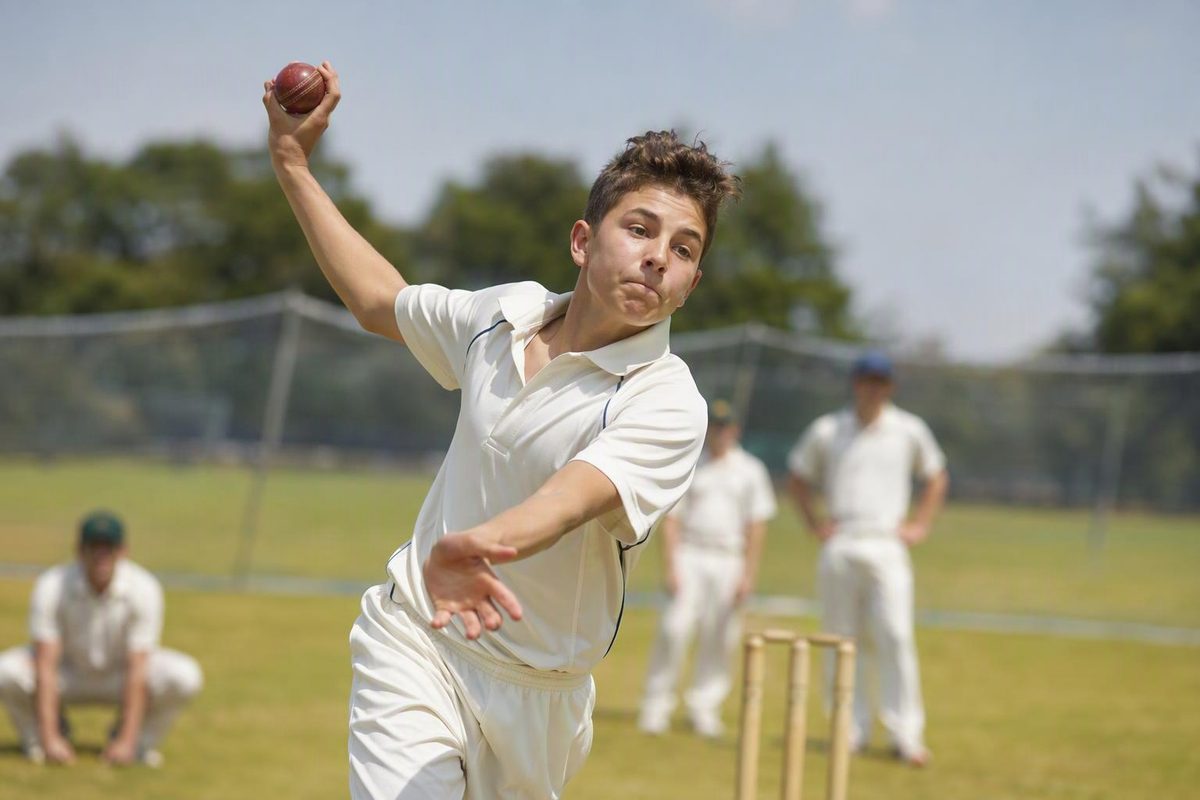
T20 means Twenty20 cricket: each team has one innings of up to 20 overs. T20I is the international version of the format. The ICC’s format guide explains how it differs from 50-over and Test cricket.
For a club spinner, start your T20 preparation with one controllable task: land your stock ball on its intended target, including immediately after a boundary. Your stock ball is your normal spinning delivery—not a new variation chosen because the previous delivery went for six.
The practice below measures that task without requiring a batter or a full field.
T20 rules that affect your bowling plan
Under the ICC playing conditions effective from October 2026, the following apply to a full-length T20 international innings:
| Feature | Men’s T20Is | Women’s T20Is |
|---|---|---|
| Maximum innings length | 20 overs | 20 overs |
| Maximum per bowler | Four overs | Four overs |
| Powerplay | First six overs | First six overs |
| Fielders allowed outside the marked fielding restriction area during the powerplay | Maximum two | Maximum two |
| Normal maximum outside that area after the powerplay | Five | Four |
These limits come from clauses 13 and 28 of the men’s and women’s T20I conditions. Reduced innings have adjusted bowling and powerplay limits; slow-over-rate penalties can also reduce the permitted number of fielders outside the restriction area. Check your club competition’s regulations rather than assuming every international condition applies.
An over contains six valid balls. Wides and no-balls do not count towards those six, so four completed overs contain 24 valid balls but may require more deliveries. See clause 17 of the ICC conditions or our guide to which balls count in an over.
Set up one stock-ball target
Use a safe practice lane, stumps, a ball appropriate to your age group and a notebook. Bowl over your normal match distance; juniors should use their competition’s pitch length.
- Warm up, then bowl six unscored stock balls.
- Mark a flat landing rectangle approximately 1 metre long and 50 centimetres wide. Use chalk or suitable flat markers, with nothing raised in the ball’s path.
- Choose its position from your warm-up deliveries. Start with a length between the obvious short ball and the very full ball, on the line you intend to bowl to the imagined batter.
- Keep the rectangle fixed throughout the scored session. Write down its distance from the batter’s stumps and its sideways position so you can reproduce it. Count a first bounce inside or on its edge as a target hit.
This is a starting target, not a universal “perfect T20 length”. Your turn, bounce, the batter’s stance and the surface all matter. If choosing a line is the main problem, use the separate targets in our line-and-length drill first.
Use one grip cue: for an off-break, support the ball primarily with the first two fingers, without forcing an uncomfortable spread. For a leg-break, keep a comfortable, relaxed grip with a gap between ball and palm and a light thumb. New Zealand Cricket’s curriculum for ages 11–13 describes these grip features, allows three fingers for young off-spinners and emphasises spinning the stock ball hard. Do not squeeze harder or abandon your normal spin effort merely to hit the rectangle.
Before scoring, choose the imagined batter’s handedness and normal stance. Use your competition’s wide guidelines to judge the ball as it passes the striker’s wicket—not simply where it lands. A partner can help judge this and watch your front-foot landing; without one, your legality record is a practice estimate.
Bowl four practice overs
These are practice blocks, not four consecutive overs in a match. Take a short rest between blocks.
Overs 1–2: establish control
Bowl only your stock ball. Complete six valid balls in each over, recording wides and no-balls separately and replacing them.
After every delivery, record:
- T: landed in the target.
- S or F: missed short or full.
- O or L: missed towards the imagined batter’s off side or leg side.
- Wd or Nb: wide or no-ball.
A miss can receive two direction codes. An illegal delivery does not earn a target hit, even if it lands inside the rectangle.
Overs 3–4: rehearse the next ball after a boundary
After the third valid ball of each over, imagine that the batter has hit it for six. If a partner is present, ask them to call “six” regardless of where it landed.
Step back and use this reset:
- Take one unhurried breath.
- Name your intended line and length.
- Set your grip using the same cue.
- Bowl the next stock ball with your normal action and spin intent.
Do not add a googly, quicker ball or new angle during this test. The imagined boundary gives you a cue to rehearse your routine; it does not reproduce match pressure or tell you whether the previous delivery deserved punishment.
Record a useful checkpoint
Use one row per over:
| Over | Target hits / 6 | Wides | No-balls | First delivery after reset: legal and on target? | Main miss |
|---|---|---|---|---|---|
| 1 | Not tested | ||||
| 2 | Not tested | ||||
| 3 | |||||
| 4 |
If the first delivery after a reset is illegal, mark No, then replace it to complete the over. Do not let the replacement erase the mistake.
As a practical progression goal, aim for at least four legal target hits in each over, no wides or no-balls, and both first deliveries after the resets on target. This is a suggested drill benchmark, not a validated standard or a prediction of match figures. Meet it across two sessions before adding one already-practised variation to the drill.
If you fall short, let the scorecard choose the next task: repeated short misses call for length work; scattered sideways misses call for line work; overstepping calls for a front-foot landing check. If only the post-boundary deliveries deteriorate, repeat the reset blocks before changing your grip or adding another delivery.