
Build a More Accurate Stock Ball Without Guiding It
Set a normal-intent baseline, isolate clean spin, add a generous landing gate, then restore the full approach when accuracy and spin hold.
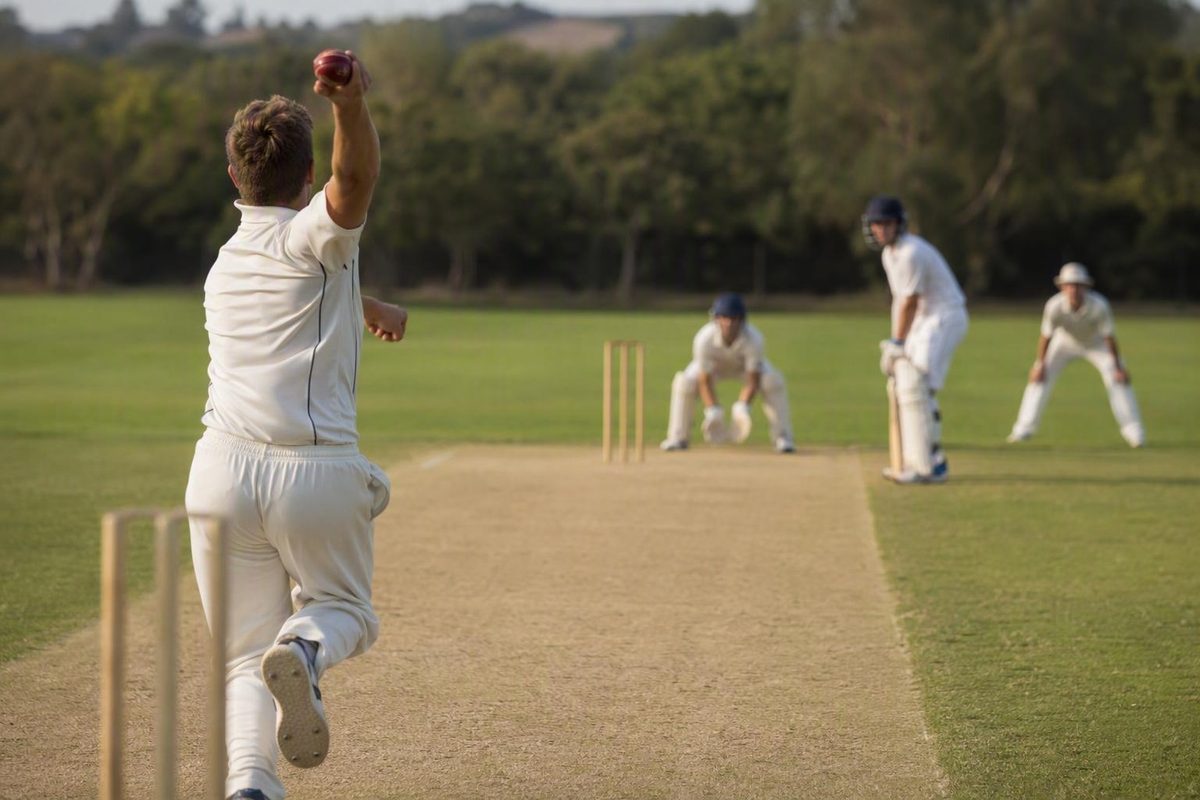
To improve spin-bowling accuracy without losing revolutions, do not steer the ball or deliberately slow the hand merely to hit a target. Preserve a committed release, simplify the action, and test whether control improves while your normal spin indicators remain stable.
Use four steps: establish a normal-intent baseline, isolate clean spin production, bowl the same stock delivery at a generous landing gate, and restore the full approach only when both accuracy and spin indicators hold up.
The short answer: keep the release committed and simplify the task
Cricket Australia spin-bowling pathways coach Craig Howard has argued that bowlers should accelerate through release rather than slow down solely to seek control. He has also reported that slowing a bowler can reduce revolutions. The goal is not maximum effort at any cost; it is a balanced, repeatable action that directs energy toward the target without weakening the release in this Cricket Australia interview.
Follow this workflow:
- Set a baseline: bowl your stock delivery at normal match intent.
- Isolate spin production: remove line-and-length demands and rehearse a clean release.
- Add a landing gate: attack a generous target with the same stock ball.
- Restore the approach: progress from one step to a shortened approach and then the full run-up, provided accuracy and spin indicators remain stable.
The tension between control and threat is a real coaching question, but social discussion cannot establish what training method works. One Reddit discussion, for example, raises the narrower question of whether accurate finger spin with limited turn offers enough threat; it provides audience context, not verified technical evidence in this community discussion.
No controlled trial cited here proves that a particular drill improves accuracy while preserving revolutions. Treat the following progression as a structured way to test your own stock ball against your own baseline.
Direct your energy instead of reducing it
Accelerating through release is not the same as using an excessively fast or uncontrolled run-up. The aim is coordinated momentum: arrive balanced, transfer energy toward the target, and allow the hand to complete its normal spinning action.
Use this checkpoint sequence:
- Balanced approach: arrive at the crease without reaching, rushing, or stumbling.
- Target alignment: check whether the feet and body direct momentum along the intended line.
- Stable front-foot landing: create a repeatable base for the trunk and bowling arm.
- Repeatable arm height: reproduce your normal arm path rather than forcing a supposedly ideal height.
- Consistent seam presentation: compare how the seam leaves the hand across several stock deliveries.
- Movement toward the target: let the body and follow-through continue along the intended line after release.
Howard has described working on alignment, foot position, arm height, seam position, and target-directed energy. These are coaching observations, not universal findings that connect one mechanical fault with one particular miss.
The emphasis is coordination, not forcing every body part harder.
Change only one checkpoint at a time. Bowl a baseline block, adjust one feature—such as front-foot direction—and leave the grip, approach, and release cue alone. If additional approach speed makes you lose posture or fall away, remove that uncontrolled speed while retaining commitment through release.
There is no single correct run-up speed, arm height, or seam angle for every spinner. Useful mechanics depend on spin style, anatomy, physical capacity, release pace, tactical purpose, and conditions.
Use this spin-preserving target progression
This is a publisher-recommended practice structure, not a scientifically validated protocol.
Stage 1: isolate the release
Stand still and spin the ball from hand to hand at chest height for two minutes. Seek clean, repeatable rotation and your intended seam orientation. An upright seam is appropriate only where it fits the stock delivery you are practising; it is not a universal requirement for every spinner.
Stage 2: use a one-step gate
Place two markers a bat’s length apart on your chosen good length. Take one step and bowl 20 stock deliveries through your normal action. Keep the release intent you would use when trying to beat a batter rather than floating or guiding the ball into the area.
Spin Bowling Tips prescribes the two-minute hand-spin exercise and the 20-ball, one-step gate drill. Its suggested checkpoint is 15 hits from 20 while retaining audible spin before restoring the run-up. Those numbers describe the publisher’s drill, not a universal standard of bowling accuracy in its off-break guide.
Record each result as:
- Hit
- Miss left
- Miss right
- Miss short
- Miss full
Also mark approximate landing points on a simple pitch sketch or grid. A hit total shows how often you found the gate; a landing plot shows whether the overall cluster actually tightened.
Flat tape or small hoops are optional alternatives to upright cones because they allow the ball to bounce and turn without striking a solid marker. This is a suggestion from anonymous or pseudonymous commenters, not a tested performance advantage in a Reddit discussion of leg-spin length practice.
If the hit count improves only because the release becomes quieter, slower, or visibly guided, widen the gate. Restore the stock release first and narrow the target only when you can attack the larger area without sacrificing it.
Progress in this order:
- Stationary release work
- One-step bowling
- Shortened approach, if needed
- Full approach
Keep the stock delivery unchanged throughout. Adding a wrong’un, arm ball, slider, or another variation makes it harder to identify whether the technical change helped.
Score accuracy and spin in the same practice log
Begin each test with 20 stock balls at normal match intent. Here, 20 is an editorial counting convention that makes blocks easy to compare; it is not a validated minimum or universal coaching standard.
Use the same block identifier across these three compact tables:
| Block details | Conditions | Target result | Miss pattern |
|---|---|---|---|
| Date and block ID | Surface, wind, ball condition | __ / 20 | L __ / R __ / short __ / full __ |
| Landing pattern | Measured pace | Measured rpm | Spin-axis reading |
|---|---|---|---|
| Pitch sketch or grid | If available | If available | Only with suitable equipment |
| Release effort | Seam rotation | Flight and bounce | Change tested |
|---|---|---|---|
| Personal scale, such as 1–10 | Stable, changed, or unclear | Fizz, dip, turn, bounce | One variable only |
Suitable single-variable tests include:
- Front-foot direction
- Approach momentum
- Arm height
- Grip pressure
- Seam presentation
Do not compare your figures with an elite bowler and assume more rpm must be better. TrackMan can measure revolutions, but the useful comparison for this drill is the normal pace-and-spin profile of your own stock ball.
Use this decision table after each block:
| Accuracy result | Spin result | Interpretation to test | Next step |
|---|---|---|---|
| More hits or tighter landing cluster | Stable | Change may be useful | Retain and retest |
| More hits or tighter cluster | Reduced | Possible steering or deceleration | Widen gate; restore intent |
| Fewer hits or wider cluster | Stable | Release remains strong; control shifted | Revisit balance and alignment |
| Accuracy and spin both worsen | Reduced | Change is not helping presently | Abandon or simplify it |
“Stable” does not mean identical on every delivery. It means there is no clear, repeatable decline in the available like-for-like indicators across sessions. If audible fizz appears stable but dip declines, or different proxies point in different directions, record the result as unclear and repeat the comparison rather than declaring success.
Compare patterns over multiple sessions. One strong block may reflect rhythm, surface response, wind, or ordinary variation rather than a durable improvement.
Do not confuse revolutions, spin axis, and visible turn
Total revolutions describe how quickly the ball rotates, but not the complete character of the delivery.
Smart-ball research classifies spin deliveries using the orientation of the angular-velocity vector and distinguishes categories including sidespin, top-sidespin, and topspin. This supports the distinction between rotation rate and rotation orientation; it does not prove that a particular accuracy drill preserves spin in the published smart-ball research.
Howard’s coaching view is that greater over-spin can contribute to dip and bounce, potentially increasing the practical margin for error in length even when the delivery does not produce maximum sideways deviation. He also gives approximate examples of 2,800 rpm at 75–80 kph and 2,300–2,400 rpm at a higher pace to illustrate that effective pace-and-spin combinations can differ. Those figures are not targets for club players or juniors. The same interview reports that Cricket Australia’s TrackMan system measures ball revolutions.
If the ball turns less during one session, possible explanations include:
- Fewer revolutions
- A different spin axis
- Greater release pace
- A less responsive surface
- A different landing location
- Changes in ball condition
Compare like with like before rebuilding the grip or action.
Troubleshoot the result without rebuilding everything
Treat these as tests, not definitive diagnoses.
| Symptom | Possible issue to test | Next practice adjustment |
|---|---|---|
| More hits but less fizz, dip, or measured rpm | Squeezing, steering, or decelerating | Widen the gate and restore normal release intent |
| High rpm but scattered line | Balance, front-foot direction, head position, or follow-through | Test one alignment checkpoint at a time |
| Inconsistent length | Release timing or unstable approach | Return to one step and plot short and full misses separately |
| Control disappears with the run-up | Excessive or poorly coordinated approach speed | Shorten the approach and rebuild gradually |
| Less visible turn with stable rpm | Axis, pace, surface, landing point, or ball condition | Compare conditions before changing the grip |
| Forced off-spin release | Grip pressure or finger position | Rehearse a comfortable finger-led release |
| Several styles become inconsistent | Too many changing release patterns | Return to one repeatable stock ball |
For a right-arm off-break, you can test a comfortably spread index and middle finger, a light or absent thumb, space between the ball and palm, and a finger-led release. These are off-spin cues and should not be transferred unchanged to leg-spin or another wrist-spin style.
If a change creates two problems at once—such as poorer line and less spin—remove it instead of adding several compensations. Simplification makes the cause easier to identify.
Adapt the plan to your spin style and physical capacity
The shared framework applies broadly:
- Establish your baseline.
- Preserve normal release intent.
- Practise through a landing zone.
- Record accuracy and spin indicators together.
- Progress the approach only when both remain stable.
The technical details must still fit the bowler. Finger spinners may experiment with finger spacing, thumb pressure, seam orientation, and how the ball leaves the spinning finger. Wrist spinners need style-specific guidance for wrist position, hand path, and release.
Likewise, the useful amount of run-up momentum, release pace, side-spin, and over-spin varies with style, anatomy, physical capacity, and playing conditions. The purpose of the log is to discover a repeatable personal profile, not to force every bowler toward one model.
As a precautionary boundary for this plan, juniors should make substantial changes to run-up momentum, grip, wrist action, or workload only with a coach or responsible adult supervising. The off-break guide notes that initial spinning-finger skin soreness may occur, but sharp joint pain is a reason to stop and have the grip checked in person rather than bowling through it.
Line-and-length control is built through repetition, and neither forum suggestions nor this progression guarantees simultaneous gains in accuracy and spin. Bowl the stock ball with normal release intent, direct a balanced action toward the target, and judge progress from both the landing pattern and the available spin indicators. If accuracy improves only when you guide the ball, widen the target, simplify the drill, and rebuild control without abandoning acceleration.