
Where Mid-Off Stands—and How a Spinner Should Use the Position
Learn where mid-off stands, what the fielder protects, when to change the angle or depth, and how to test the position in a 24-ball spin drill.
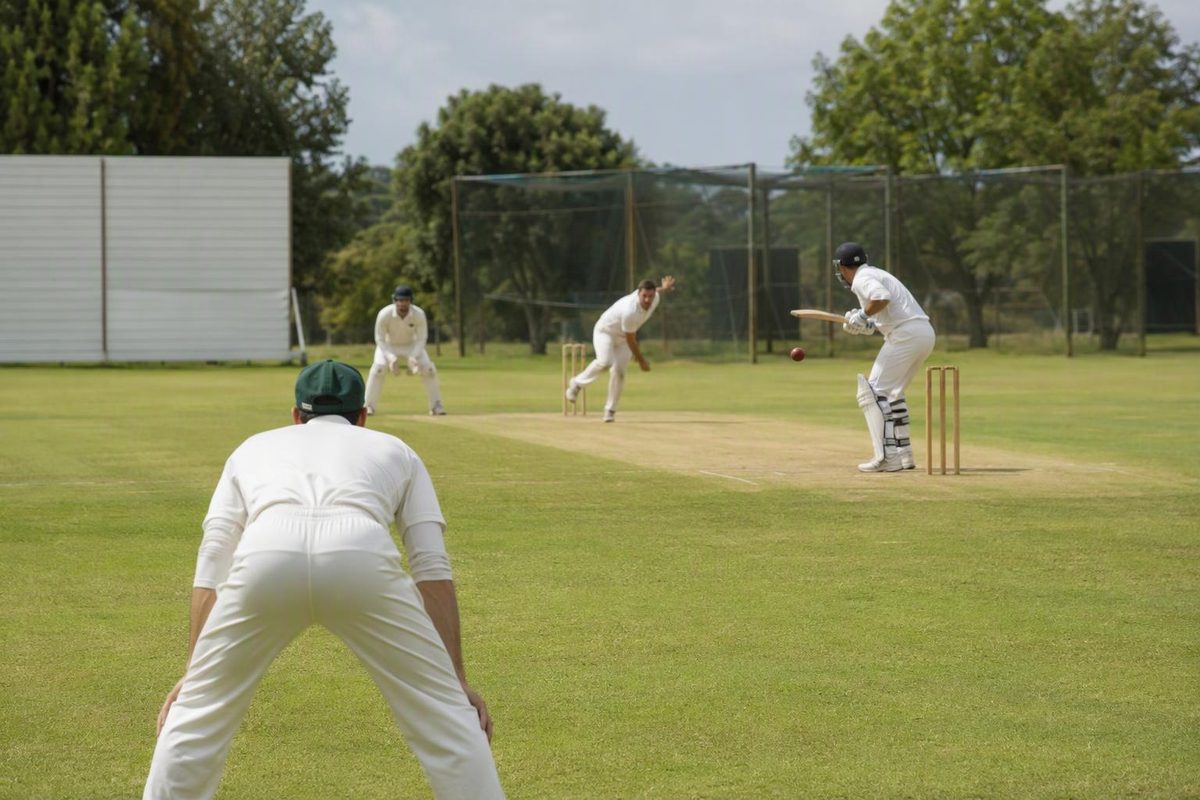
Mid-off is an off-side fielder in front of the striker, between the bowler’s line and cover. To find the basic position, start near the line of a straight drive, then move several paces towards the batter’s off side—the side outside their off stump in a conventional stance.
For a regulation mid-off, 25–30 yards (about 23–27 metres) from the striker is a useful starting range, not a compulsory mark. The position’s main jobs are to cut off the straight drive and prevent a quick single. It also keeps the fielder close enough to speak to the bowler, which is one reason captains often stand there. These roles and the conventional distance are described in the BBC’s guide to mid-off.
Mid-off changes with the striker
Mid-off follows the batter’s off side. When a right-handed striker is replaced by a left-handed striker, the physical side of the ground changes.
Do not define the position by a clubhouse, scoreboard or permanent side of the pitch. MCC states that the striker’s off side is determined by their batting position when the ball comes into play (Law 36.3). For a fuller way to identify positions by side, angle and depth, use this spinner’s guide to cricketing field positions.
What mid-off does for a spin bowler
A useful mid-off has three distinct jobs:
- Save the straight single. The fielder attacks a firm push or checked drive and makes the striker hesitate before setting off.
- Stop the boundary along the ground. A regulation mid-off should cover a reasonably straight drive without being so deep that every soft push produces a run.
- Show the bowler what the batter is attempting. A batter advancing and driving repeatedly towards mid-off may be reaching the pitch. A mistimed ball arriving in the air may indicate that the bowler has beaten them in flight or dip.
The third job needs careful interpretation. If mid-off repeatedly rescues low full tosses and half-volleys, the field has not proved the bowling plan is working. Record those balls as length errors rather than successful pressure balls.
Mid-off can support either finger-spin or wrist-spin. Do not assume it belongs only to an off-spinner. Its value depends on the batter’s scoring route, the bowler’s stock-ball line and the match situation.
Choose the right version
The names describe different depths rather than exact surveyed points:
- Mid-off: the normal single-saving position.
- Short mid-off: brought closer to pressure the single or seek a checked-drive catch.
- Silly mid-off: a close-catching position near the batter.
- Deep mid-off: farther back but normally short of the boundary.
- Long-off: close to the boundary, mainly protecting the lofted straight or off-side drive.
Treat silly mid-off as a separate safety decision, not merely a few extra steps in. Use appropriate supervision and follow the helmet and age rules for your competition. As one jurisdictional example, the ECB recommends that adults fielding within 8 yards (7.3 metres) of the striker in hard-ball cricket wear a helmet with a faceguard or grille; its guidance also points to mandatory requirements for juniors in England and Wales (ECB Recreational Cricket Safety Guidelines).
Move the regulation position with a reason:
- Go straighter when drives keep passing between the bowler and fielder.
- Go wider when the batter consistently finds the gap towards cover.
- Come in when soft pushes produce comfortable singles.
- Go back when firmly struck drives repeatedly beat the fielder, provided conceding the single fits the plan.
- Use long-off when protecting the aerial boundary matters more than saving one.
A field change should not ask one player to cover two incompatible shots. Mid-off cannot simultaneously shut down the quick single and patrol the boundary.
A 24-ball mid-off test
This drill tests the position while preserving the bowler’s stock delivery.
Setup
You need a bowler, batter and mid-off fielder. A wicketkeeper or observer is helpful.
- Put mid-off at a normal starting depth, approximately 25–30 yards from the striker.
- Mark the fielder’s starting point with a cone.
- Place a landing target for the bowler’s stock ball. Make it generous enough that the bowler can maintain normal spin and intent.
- Use one stock delivery only—no variations during the test.
- Ask the batter to call “yes” or “no” as they would in a match. They do not need to complete a full-speed run; the call records whether the position offered a single.
Create a simple record with four columns:
| Ball | Hit landing target? | Result at mid-off | Bowling note |
|---|---|---|---|
| 1–24 | Yes/No | Dot, single offered, passed or aerial chance | Full, good length or short |
Bowl the first 12
The batter plays normally but should not manufacture a shot solely to defeat the drill. Mid-off begins in a balanced ready position as the ball is released, attacks anything within reach and returns the ball towards the appropriate end.
Make deliberate positional changes between deliveries. Under MCC Law 28.6, most fielder movement after the ball comes into play and before it reaches the striker is unfair. The exceptions include minor adjustments, limited movement towards the striker by a non-close fielder, and movement in response to the stroke being played or indicated (MCC Law 28).
Make one adjustment
After 12 balls, inspect the record:
- Several singles straight of the cone: move mid-off two or three paces straighter.
- Several singles on the cover side: move two or three paces wider.
- Several soft singles despite clean pickups: come in a few paces.
- Firm drives passing a correctly placed fielder: first check whether they came from overpitched balls before moving deeper.
Change only the fielder’s position. Keep the landing target and stock-ball intent unchanged.
Bowl the second 12
Repeat the block, then compare the two sets of target-hitting deliveries:
- How many became dots?
- How many still offered a single?
- Did the adjustment open an easier gap elsewhere?
- How many interventions merely repaired a full-length error?
Keep the new position if it turns more target deliveries into dots without creating an obvious straight or cover-side gap. If the evidence is mixed, return to the original cone and collect another block at the next practice. This separates a useful field adjustment from a conclusion based on one good stop.