
Off-Spin vs Leg Spin: Choose a Release You Can Repeat
Compare off-spin and leg spin by turn direction, grip and release, then use a 36-ball stock-ball drill to check spin and landing control.
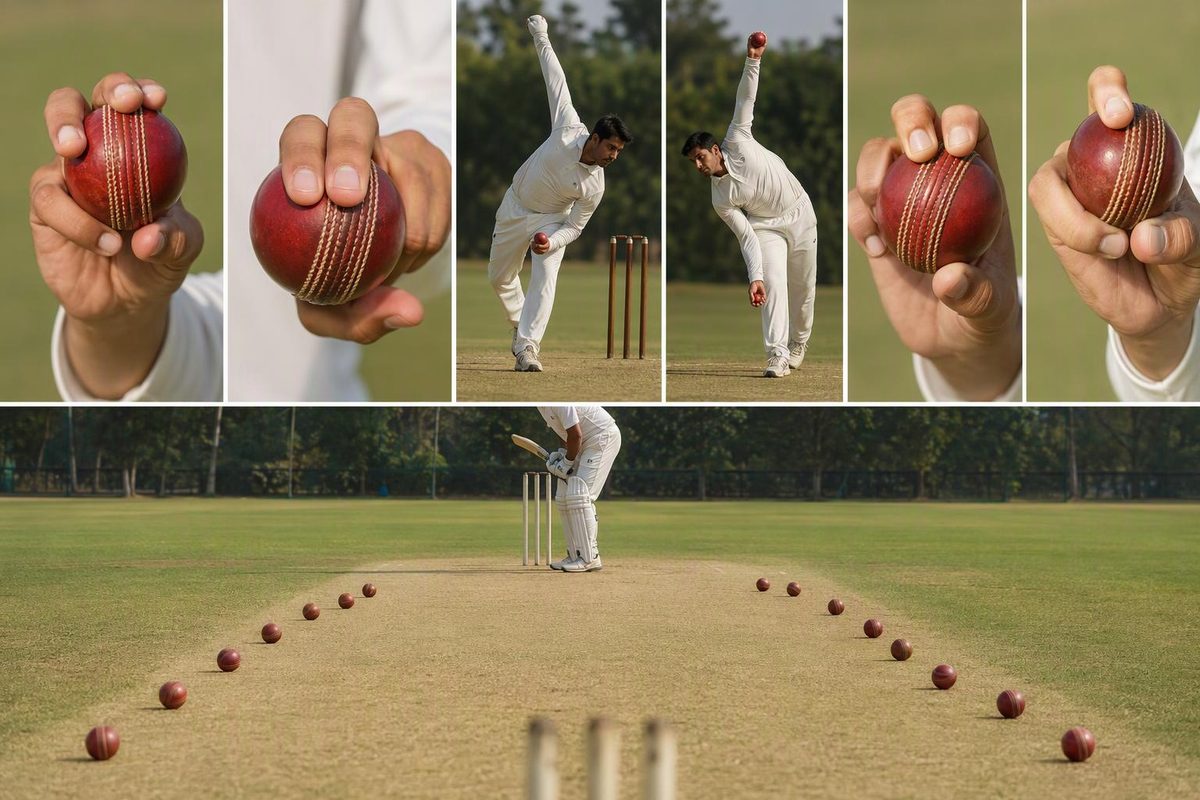
Off-spin is finger spin; leg spin is wrist spin. For a right-arm bowler facing a right-handed batter, the stock off-break is intended to turn towards the batter’s body after bouncing. The stock leg-break turns away. The difference is not simply which way you twist your hand: the grips and main spinning fingers differ too.
If you are choosing a style, start with the release you can spin deliberately and repeat comfortably—not the one that produces your biggest single turning ball.
The main differences
This comparison assumes a right-arm bowler. A stock ball is your normal delivery, rather than a variation. Turn directions describe the intended stock-ball movement, not a guarantee that every ball will turn visibly.
| Feature | Off-spin | Leg spin |
|---|---|---|
| Spin family | Finger spin | Wrist spin |
| Stock delivery | Off-break | Leg-break |
| Turn against a right-handed batter | Off side to leg side: towards the body | Leg side to off side: away from the body |
| Turn against a left-handed batter | Away from the body | Towards the body |
| Main release emphasis | Index finger, assisted by the middle finger and wrist | Wrist action working with the ring finger |
| Starting grip | Index and middle fingers spread across the seam | Index and middle fingers across the seam, ring finger bent against the ball |
The BBC’s off-spin guide and leg-spin guide describe these grips and releases. The names identify the bowling family; they do not mean that every delivery turns in the stock direction. A leg-spinner’s googly, for example, turns the opposite way to the leg-break.
Left-arm bowlers: finger spin is normally called left-arm orthodox, with the stock ball turning away from a right-hander. Left-arm wrist spin turns towards a right-hander. These directions reverse against left-handed batters, as set out in the spin-type definitions in this research paper, which also defines the googly. Do not label a left-arm delivery “leg spin” just because it turns away from a right-hander.
What should the release feel like?
Off-spin: let the index finger work
Spread the index and middle fingers across the seam, supporting the ball with the ring finger. Keep the thumb light rather than squeezing the ball between thumb and fingers.
Cue: feel the index finger pull across the ball at release, with the middle finger assisting. Allow the wrist to turn naturally; finger spin does not mean a motionless wrist. This follows the release emphasis in the BBC off-spin instructions.
For the finger-by-finger setup, use the off-break grip guide.
Leg spin: combine the wrist and ring finger
Place the index and middle fingers across the seam, with the ring finger bent against the ball. Keep the grip relaxed enough for the ball to leave the hand cleanly.
Cue: start with a comfortably cocked wrist—a setup recommended in Terry Jenner’s leg-spin basics—then feel the ring finger work against the ball as the wrist unfolds. “Wrist spin” does not mean the fingers do nothing: the BBC leg-spin instructions give the third finger—the ring finger—much of the work at release.
Avoid forcing an extreme wrist position. Stop if the grip or release causes sharp joint pain and have it checked in person.
Which is easier—and which is better?
Leg spin is generally considered harder to control while maintaining spin, a difficulty discussed in the research paper’s introduction. That is a general tendency, not a reason to abandon a comfortable leg-break release.
For a beginner, choose the style that lets you produce intentional rotation without strain. For an established bowler, do not switch families merely because another bowler turns the ball further. Neither “off-spin means accuracy” nor “leg spin means wickets” is a useful practice rule.
A 36-ball stock-ball check
Use this suggested drill with one selected style, not alternating releases every ball.
Setup: use a safe net or clear practice area, a suitable ball and a flat landing target about 1 metre long by 1 metre wide. Position it on your intended stock-ball line and length. Keep the ball, surface and target unchanged during the test.
- 12 short releases: from a stationary position, bowl overarm from roughly 6–8 metres. Use your chosen release cue. Record whether each release felt clean or slipped; watch the rotation too, rather than treating a comfortable release as proof of spin.
- 12 target balls: bowl from the pitch length appropriate to your cricket, using a short, comfortable approach. Keep the same spinning intent. Record clean-feeling releases and target hits separately. Note each miss as short, full, left or right, with left and right viewed from the bowler’s end.
- 12 repeat balls: repeat with the same approach, grip, target and recording method. In both target blocks, note visible turn as towards, away or unclear, relative to an imaginary batter of a chosen handedness.
Your checkpoint is repeatability, not maximum turn. Compare the two target blocks: did clean releases and target hits hold up together? If accuracy improved only when you stopped spinning deliberately, repeat the short-release stage before narrowing the target.
If undecided, try the other style in a separate session under similar conditions, then repeat both tests before settling on a style. If you already have a stock ball, keep developing that release with the accuracy-without-losing-revolutions drills before adding variations.