
Under-10 Spin-Bowling Drills: Release, Target and Six-Ball Challenge
Try a short under-10 cricket spin session with gentle release practice, a generous landing target and a six-ball scorecard.
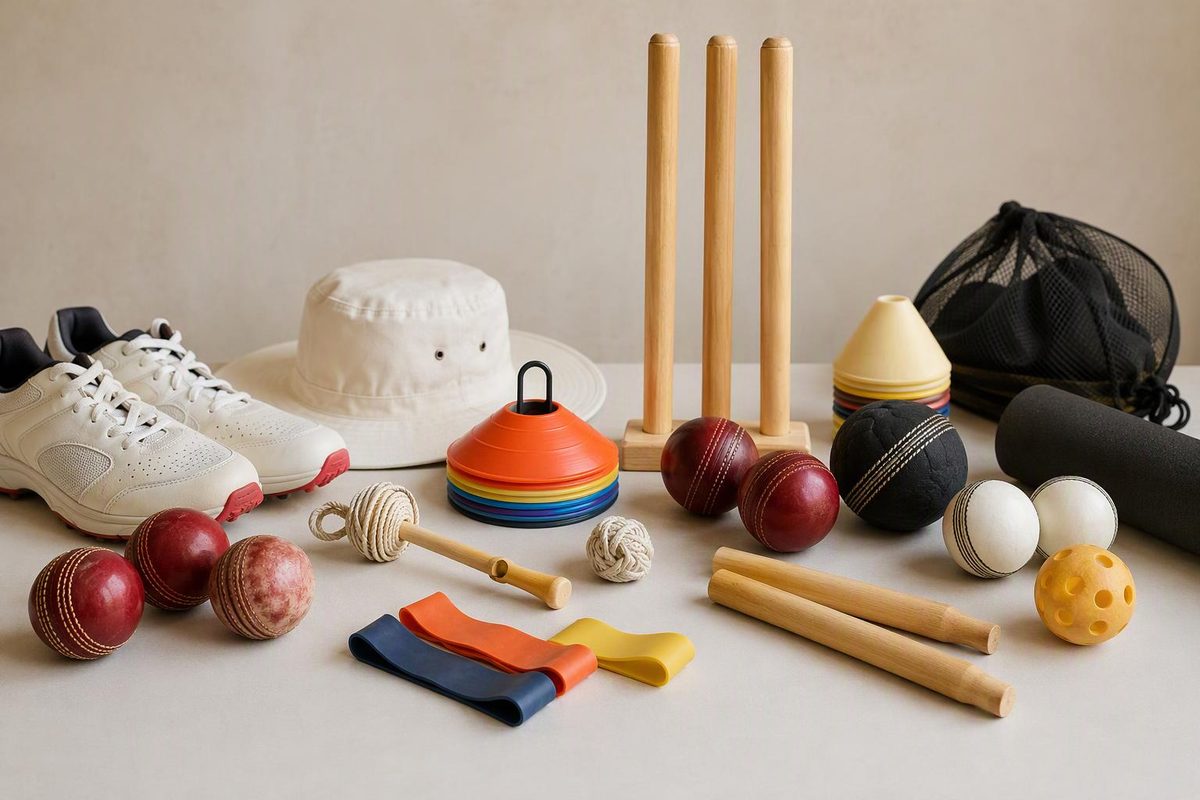
This guide is for under-10 cricket spin bowling, not baseball pitching. The aim is simple: release one stock ball—the bowler’s normal spinning delivery—and land it in a repeatable area before trying variations.
Use the three drills below as a short session with a parent or coach. The distances, counts and checkpoints are suggested practice settings, not official age-group standards or validated development benchmarks.
Set up the session
You need a soft practice ball with a visible seam or two-colour pattern, stumps, flat target markers and a notebook. Use a clear, level area with no batter initially. Keep other children out of the delivery lane and retrieve balls only when bowling has stopped.
Choose equipment and space to suit the child’s ability. Cricket Victoria’s coaching guidance specifically asks coaches to consider ball type, equipment, space, age and playing level when adapting activities.
Check your competition’s pitch length before extending the drills to match distance. For example, Wiltshire Cricket lists 17 yards for U10 cricket; that is not a universal rule for every junior competition. Our under-10 pitch-distance guide explains what to check.
Start with easy movement and a few relaxed practice actions. Stop if anything hurts; do not force a finger spread or wrist position. End the session early if the child becomes tired rather than insisting on every repetition.
1. Six gentle hand spins: find the release
Setup: Stand comfortably with the ball in the bowling hand. Keep this exercise close to the body rather than throwing to a partner.
Action: Spin the ball gently upward a short distance and catch it with both hands. Repeat six times, watching the seam or colour pattern rotate.
Choose the cue for the child’s existing spin type:
- Finger spin—off-break or left-arm orthodox: Let the index finger do the spinning work. Keep the grip comfortable, with the index and middle fingers across the seam.
- Wrist spin—leg-break: Use the ring finger against the seam together with the wrist action. Do not replace it with the finger-spinner’s index-finger cue.
South Canterbury Cricket’s coaching manual distinguishes these grips and release actions. For a fuller finger-by-finger explanation, see the off-break grip guide.
Record: Put a tick beside each attempt where rotation is clearly visible. Mark uncertain attempts with a question mark rather than guessing.
Checkpoint: If the ball repeatedly slips out without visible rotation, stay with gentle release work. This is a hand exercise, not a match bowling action.
2. Six standing deliveries: add a landing target
Setup: Start about 8 metres from the receiving stumps. Mark a rectangle roughly 1 metre wide and 2 metres long, centred on the line of the stumps, with its centre about 2 metres in front of them. Use flat markers outside its edges, leaving the bounce area clear.
This is a generous practice target, not a fixed definition of a good match length. The drill adapts the standing spin and target-bowling activities in South Canterbury Cricket’s manual.
Action: Bowl six balls without a run-up, using a comfortable overarm action and the same release cue each time. Allow the follow-through; do not try to hold a frozen finishing pose.
Record: Give one point when the first bounce lands inside the rectangle. For a miss, write short, full, left or right, viewed from the bowler’s end. A ball that reaches the stumps without bouncing is a miss.
Checkpoint: Try to land four of six in the target while still attempting to spin the ball. If reaching it requires a heave, shorten the distance. Do not tighten the target yet.
3. Two six-ball challenges: restore the approach
Setup: Keep the same distance and generous target at first. Once the short approach feels comfortable, extend the distance in small steps towards your competition’s pitch length—over later sessions if needed. Adjust the target’s position to keep the landing area reachable.
Action: Bowl six stock balls with the usual short approach. Pause, check the misses, then bowl another six from the same distance. Keep the same grip and release cue throughout.
Write down the bowling distance and target position, then use this scorecard:
| Block | Target hits / 6 | Most common miss | Release felt normal? |
|---|---|---|---|
| First six | |||
| Second six |
Checkpoint: If control drops sharply when adding the approach, return to standing practice. If a longer distance requires straining, move closer. If both blocks reach four target hits with a comfortable release, repeat that result in another session before changing either the distance or target size—not both together.
Count landing hits, not wickets or dramatic turn. The useful next step is a repeatable stock ball; googlies, sliders and other variations can wait.