
Two Fingers Across the Seam: Building an Off-Break From the Grip Up
The off-break grip, built finger by finger: where the seam sits, what the wrist does at release, and the two drills that turn the grip into actual spin.
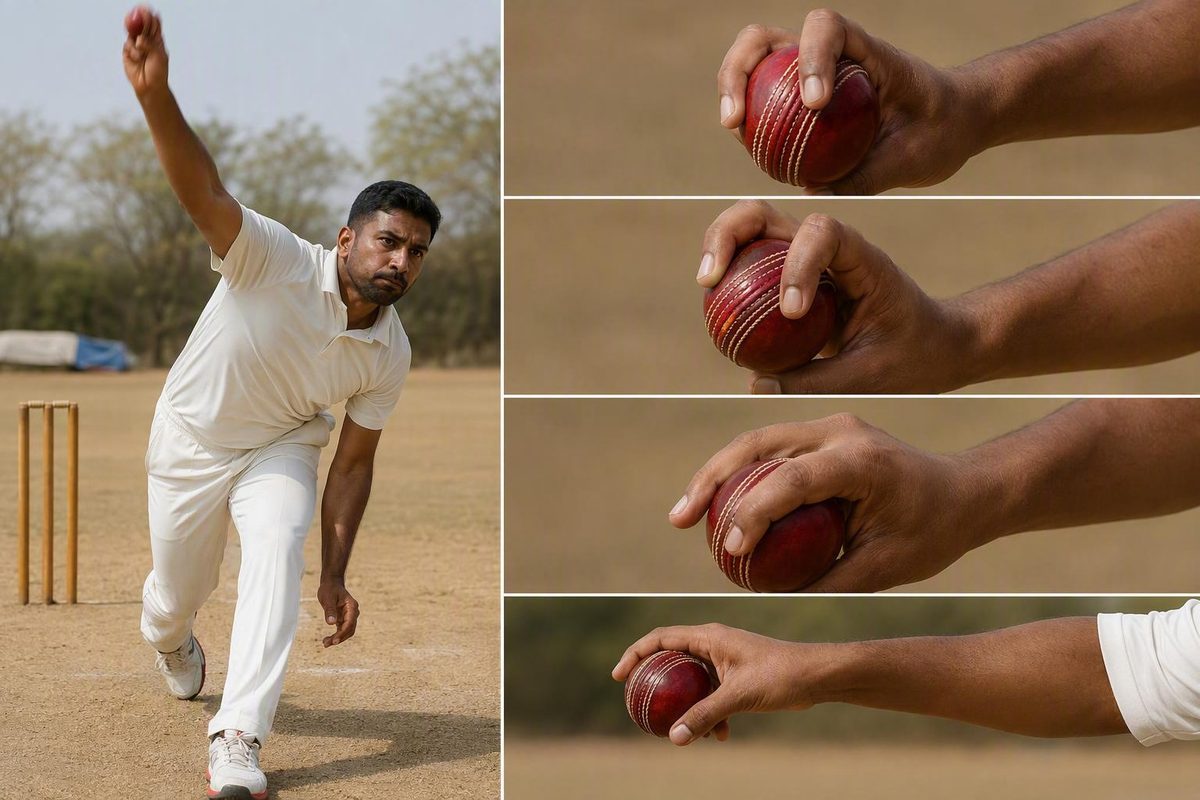
The off-break is the first ball every finger spinner should own, and nearly every problem with it — no turn, no dip, no control — traces back to the grip and the wrist. Build it in this order.
The grip, finger by finger
- Index and middle finger across the seam. Spread them so the seam runs perpendicular underneath both first knuckles — wide enough to feel a light stretch, not so wide the ball wobbles. These two fingers do the spinning; the wider the comfortable spread, the more purchase you get.
- Thumb resting, not gripping. The thumb sits lightly on the seam or off the ball entirely. If your thumbnail whitens, you’re squeezing — release will be late and flat.
- Ring finger as the shelf. The ball rests against the side of the bent ring finger. It stabilizes; it does not push.
- Ball off the palm. You should see daylight between ball and palm. Palm contact kills the snap that produces revolutions.
What the wrist does
At release the wrist and fingers turn sharply clockwise (for a right-armer) — the classic cue is turning a doorknob, hard, at the moment the ball leaves. The index finger drags down and across the seam last. A useful self-check: after release, your palm should face roughly toward fine leg, not down the pitch. Palm facing the batter means you bowled it like a seamer with a funny grip.
Drill one: spin it to yourself
Stand still and spin the ball hard from hand to hand at chest height, seam upright, listening for the fizz. Two minutes a day. This is boring and it is also how every good spinner built their fingers — you are training spin rate with zero variables attached.
Drill two: the one-step gate
Place two cones a bat’s length apart on a good length, take one step, and bowl through your full action aiming to pitch inside the gate with audible revs. Twenty balls. Only when 15 of 20 land do you add the run-up back. Adding the run-up before the release is grooved just teaches you to bowl your bad ball faster.
What to expect
With a correct grip and daily hand-to-hand work, most bowlers see visible turn on helpful surfaces inside two to three weeks. Big turn on good pitches is a two-season project of accumulated finger strength and higher rev rates — anyone promising it faster is selling something. Sore spinning-finger skin at the start is normal; sharp joint pain is not, and is your cue to stop and get the grip checked in person.