
How to Bowl Spin to Sweep Hitters: A Stock-Ball Plan
Build a stock-ball plan against sweep hitters with a landing target, sensible field cover and a 36-ball drill that tests one length change at a time.
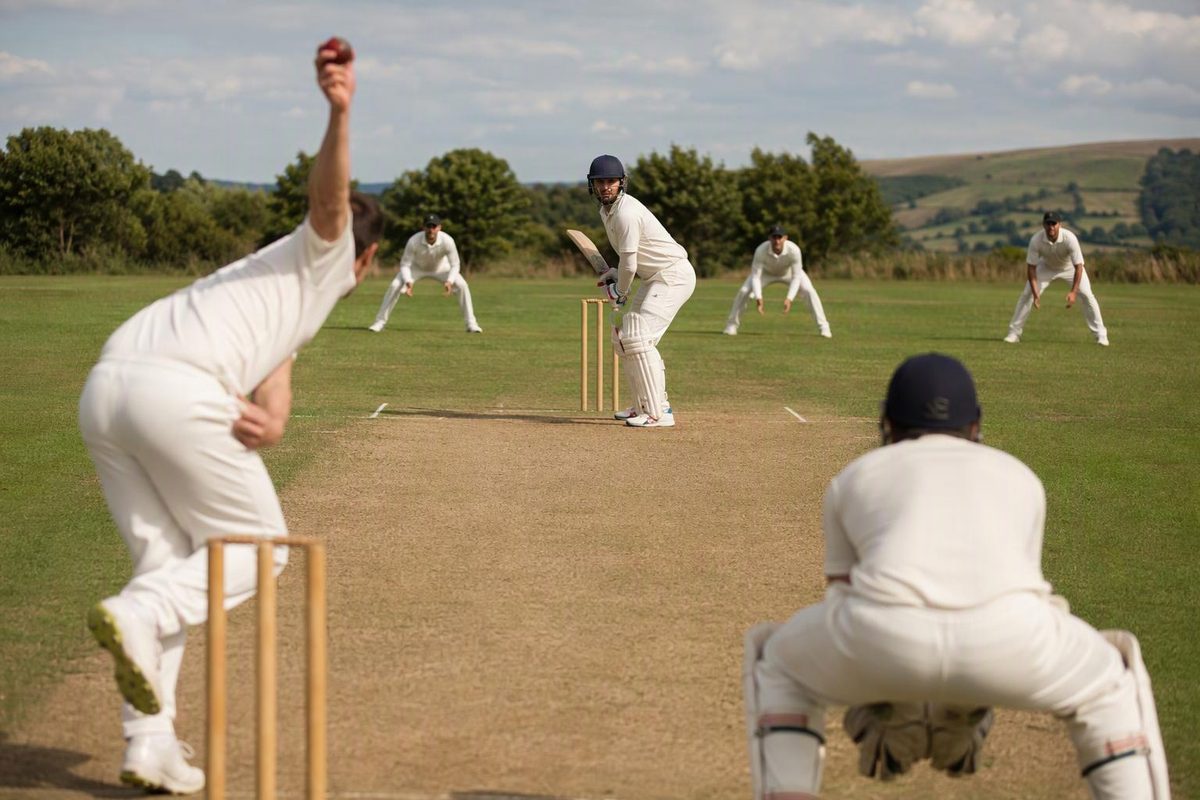
Against a batter who sweeps regularly, start with your stock ball, a repeatable length and cover for their main scoring zone. Then test a small length change. Do not respond to every boundary by bowling faster, shorter or a different variation.
Your first practice cue is simple: keep your normal grip and spin-producing release; change the landing target, not the whole action. Record whether you hit that target and what contact the batter makes. A mistimed sweep is useful evidence, but one mishit is not proof that you have solved the batter.
Identify which sweep is hurting you
Watch the contact point and where the ball travels:
- Conventional sweep: a cross-batted shot towards the leg side, often along the ground.
- Paddle or lap: a softer redirection, usually behind square on the leg side.
- Slog sweep: an attacking, usually lofted shot towards midwicket.
- Reverse sweep: a cross-batted shot towards the off side.
Also notice whether the batter gets into position early or chooses the sweep after judging the delivery. That gives you something specific to test: can you make their preferred contact less comfortable without offering an easier alternative?
There is no universally “unsweepable” good length. Cricbuzz’s analysis of Sonal Dinusha’s 2026 series against India recorded 120 sweep attempts, including reverse and slog sweeps, producing 173 runs without a dismissal. He also advanced down the pitch. The practical lesson is to watch the batter’s response, not assume that a textbook length will defeat their method.
Build the plan around your stock ball
Start by testing a line that makes your normal delivery threaten the stumps after pitching. Judge that from what the ball actually does on this surface, not just where it lands. If your stock ball turns away, an outside-edge plan can also be useful; do not sacrifice your normal spin just to make every ball finish at the stumps.
Separate the spin families:
- Finger-spin: keep your established finger-roll cue. Do not squeeze the ball harder simply because the batter is attacking.
- Wrist-spin: retain your normal wrist position and spinning-finger action. Do not introduce an unreliable googly just to change direction.
Against a right-hander, a right-arm off-break generally turns in, while a right-arm leg-break or left-arm orthodox ball generally turns away. Reverse those relationships against a left-hander. Your starting line therefore cannot be identical for every spinner and batter.
If you need to rebuild control first, use the stock-ball accuracy drills before adding this tactical session.
Keep the LBW option genuine. A bouncing ball that pitches outside leg stump cannot produce an LBW dismissal. When the batter genuinely attempts the sweep, impact must also be in line, and the ball must be judged to be hitting the wicket, among the other requirements of MCC Law 36. For LBW, the off side is determined by the batter’s stance when the ball comes into play—not redefined by a reverse sweep. Repeatedly feeding the pads from outside leg is not an LBW plan.
Test length without giving away another shot
Try a slightly fuller landing point first if the batter is comfortably sweeping your baseline length. The question is whether it crowds their preferred contact—not whether “fuller” is automatically better.
Stop extending the length if you begin serving up half-volleys or full tosses. A batter can abandon the sweep and hit straight. Devon Conway described doing exactly that after advice from MS Dhoni: expecting fuller bowling, he stepped out and attacked straight instead.
Likewise, do not confuse a modest length adjustment with dragging the ball halfway down the pitch. A shorter ball may disrupt a committed sweep but offer a pull or cut. In a PTI interview after the 2023 World Cup match against Pakistan, Kuldeep Yadav described a shorter, wider googly that was difficult to sweep—but called the resulting played-on dismissal lucky. His broader emphasis was repeatedly finding the right length for that surface.
A 36-ball sweep-response drill
Use a practice wicket and a batting partner. For hard-ball practice, the batter should wear appropriate protective equipment, including a helmet; a keeper standing up should also have suitable protection. Keep landing markers flat and clear of footwork. Without a partner, you can measure accuracy, but not whether the change troubles a sweep hitter.
Setup: mark a roughly 60 × 60 cm patch around your normal stock-ball landing point. The dimensions and counts below are suggested practice settings, not universal match lengths or validated performance standards.
- Balls 1–12: establish the baseline. Bowl your stock ball at the patch. Let the partner sweep when appropriate and choose another shot when it is not.
- Balls 13–24: move only the target. Shift the patch about 60 cm towards the batter, so the two target areas do not overlap. Keep the same intended line, grip and normal release effort. Do not use the fuller target if it is already producing half-volleys.
- Balls 25–36: retest the more useful length. Choose the target that reduced clean contact without increasing easy straight hits. If neither worked, return to the baseline rather than adding several variations.
Record each delivery as:
Target hit/miss | shot chosen | clean/mistimed/missed contact | scoring direction
As a practical checkpoint, aim for eight target hits out of twelve before comparing the batting results. If accuracy is lower, repeat the block: scattered lengths make the comparison difficult. Compare contact quality on target hits separately from your misses. Treat the result as a plan to retest, not proof from one short session.
Match the field to the evidence
Ask your captain to cover the sweep’s actual destination. Use backward square leg or fine leg for shots behind square; square leg or deep midwicket for shots in front. If the reverse sweep is the main threat, consider point or deep backward point instead. Depth depends on whether you are stopping grounded runs or covering lofted shots, within your competition’s fielding restrictions.
Keep a straight-hit plan too. Moving every available fielder towards the sweep can reward the batter for changing shots. Use the spinner’s field-position guide to agree positions clearly.
After a boundary, ask: Did I hit my target, and did the batter change their method? If you missed, correct execution first. If they repeatedly middle your intended ball, change one part of the plan and check the response again.