
How to Bowl a Googly Without Losing Your Leg-Break
Learn what a cricket googly does, how to grip and release it, and a 36-ball drill to check opposite turn and landing control.
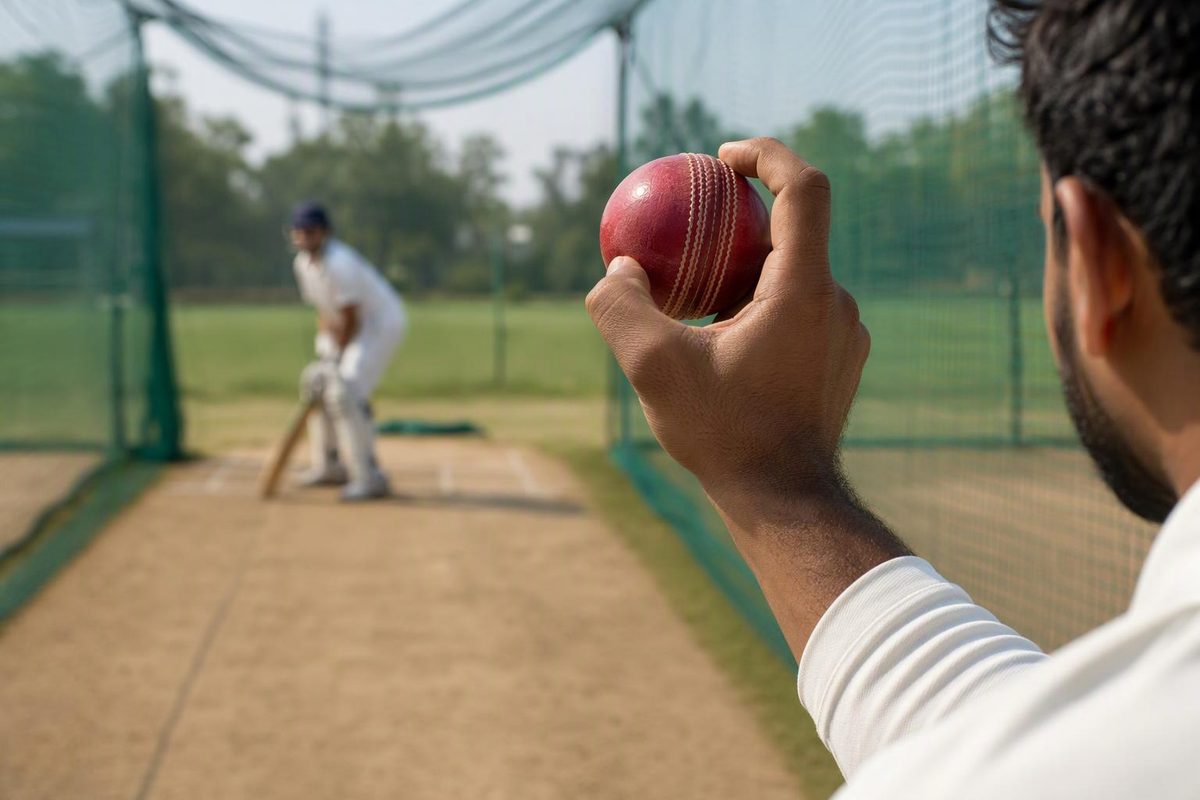
A googly, also called a wrong’un, is a wrist-spinner’s variation that turns the opposite way to their normal leg-break. For a right-arm leg-spinner bowling to a right-handed batter, the leg-break turns away from the batter; the googly turns into them, like an off-break. The grip stays much the same—the release changes. Pitchero’s coaching guide explains that contrast.
The instructions below are for right-arm wrist-spin. They are not an off-spinner’s variation. If you are still choosing or learning your stock delivery—the ball you bowl most often—start with the beginner’s spin-bowling guide.
Grip and release: change the hand presentation
Start with your normal leg-break grip:
- Place the index and middle fingers across the seam, with their top joints in contact with the ball.
- Bend the ring finger alongside the ball so it can help impart spin.
- Let the thumb support the ball lightly rather than squeezing it into the palm.
The BBC’s googly guide describes this leg-break grip and identifies the third finger—the ring finger—as the main spinning finger.
Your release cue is: show the back of your bowling hand towards the batter. The palm faces upwards as the ball leaves over the back-of-hand side. This is the key difference from the stock leg-break release, described by both the BBC and Pitchero.
Rehearse the position slowly without a ball first. Then try gentle overhead releases with a tennis ball. Do not force your wrist into a fixed angle or wrench it at the last moment. If the movement causes sharp pain, stop and seek an in-person assessment.
Initially, aim for an observable change in turn—not a perfectly disguised delivery.
A 36-ball first practice
Use a clear net or practice lane, one consistent ball and surface, and a flat landing target approximately 1 metre long by 50 centimetres wide. You can use a tennis ball for this introductory session; keep the same ball throughout. Keep people out of the delivery path. A partner can observe from a protected position; alternatively, place a phone safely behind the bowler, outside the action and ball path.
This is a suggested practice structure, not a validated skill test. Record three things for every delivery:
- Target: hit or miss.
- Turn: stock direction, opposite direction, straight or unclear.
- Miss: short, full, left or right, viewed from your end.
Judge turn by the change in the ball’s direction at the bounce, not simply where it finishes. A ball delivered diagonally can travel towards the batter without turning that way.
Balls 1–12: establish your leg-break
Bowl 12 normal leg-breaks from your usual approach. Put the target around a useful stock-ball length.
Record the usual direction of turn and target hits. This gives you something to compare the googly against. If your stock ball is not turning clearly on this surface, do not judge the variation by bounce direction alone; use video to check the release presentation instead.
Balls 13–24: shorten the task
Move to roughly 6–8 metres from the receiving end and reposition the target for a comfortable short delivery. Use a stationary or one-step overhead bowling action.
Keep the leg-break grip and use only the back-of-hand release cue. Deliver 12 googly attempts gently, without chasing extra pace.
Check the hand presentation on video if available. Record opposite turn only when you can actually see it; a ball that goes straight is not proof of a successful googly.
Balls 25–36: repeat or extend
If the short releases show clear opposite turn and reasonable control, move back a little and use a shortened approach. Otherwise, repeat the short-distance block.
Keep the same cue. If you extend the approach, do not deliberately change pace or flight at the same time.
Your checkpoint before adding disguise
As a practical progression gate, aim for eight target hits in a 12-ball block, with clear opposite turn on at least six of those hits, repeated in two sessions at the same distance. These numbers are a training target, not a universal coaching standard.
If the ball turns correctly but misses badly, stay at the shorter distance. If it lands accurately but goes straight, revisit the release rather than counting accuracy as mastery. If your leg-break starts changing too, return to stock-ball practice.
Once the googly survives a longer approach, test six leg-break–googly pairs. Record both deliveries separately. The useful variation is one you can land while still retaining your normal leg-break—not simply the ball that turns most in an isolated drill.