
Cricket rules made simple: follow the score and understand your first over
Learn cricket’s basic rules: runs, wickets, overs, wides, no-balls and winning a match, plus a simple crease-control drill for new spin bowlers.
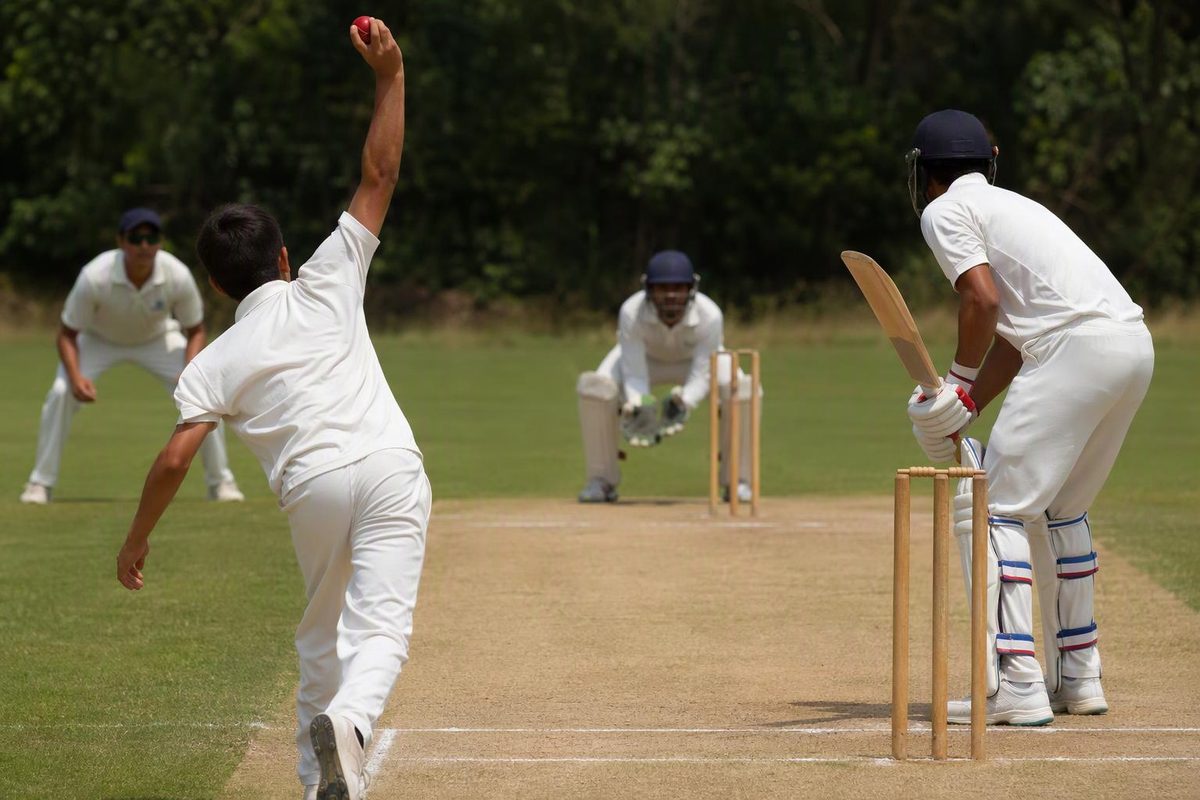
Cricket is easier to follow when you watch runs scored and wickets lost—plus balls remaining in a limited-overs match. The batting team tries to score runs; the fielding team tries to dismiss batters and limit scoring.
Who does what?
A standard match has two teams of 11 players. Two batters are on the field at once. The striker faces the delivery; the non-striker waits at the bowler’s end. The fielding team supplies the bowler, wicketkeeper and other fielders.
The pitch is the central strip, normally 22 yards long; governing bodies set pitch lengths for junior cricket. A set of three stumps with two bails sits at each end. This is a wicket, but the same word also means a dismissal: “three wickets lost” means three batters are out.
An innings is a team’s turn to bat. The captain winning the coin toss chooses whether to bat or field first.
How runs are scored
- Running: each time both batters safely exchange ends while the ball is in play, they score one run. They can turn and run again.
- Four: a hit reaches the boundary after touching the ground inside the field.
- Six: a hit clears the boundary without first touching the ground inside the field. These are the normal boundary allowances.
- Extras: runs added to the team’s score rather than an individual batter’s score. These include wides, no-balls, byes and leg-byes.
Byes and leg-byes can be scored without a bat hit. Byes come from a delivery that is not a wide and passes the batter without touching bat or body. Leg-byes follow body contact, provided the batter attempted a shot or tried to avoid being hit.
For running, ground the bat beyond the crease line, not merely on it. Normally, a batter is safe in their ground when some part of their bat or body is touching the ground behind the popping crease.
What is an over?
An over is six valid deliveries. Wides and no-balls do not count towards those six, so they need replacing. After an over, bowling switches to the other end; the same bowler cannot bowl consecutive overs. See MCC Law 17.
Two calls matter immediately:
- Wide: broadly, a delivery beyond the batter’s reach for a normal stroke. It adds one penalty run, plus any further runs scored.
- No-ball: an illegal delivery, for example because of overstepping. It adds one penalty run, plus other runs. The batter cannot be bowled, caught, LBW or stumped from it, although a run-out remains possible.
85/3 after 12.3 overs means 85 runs, three wickets lost, and 12 complete overs plus three valid balls—not a decimal. That is 75 valid deliveries: (12 × 6) + 3. Our guide to counting an over covers the common scorecard traps.
How batters get out
These five dismissals are enough to start following a match:
| Dismissal | Basic meaning |
|---|---|
| Bowled | The delivery breaks the striker’s wicket, even after touching their bat or body. |
| Caught | The ball touches the bat and a fielder completes a fair catch before it touches the ground. |
| LBW | Without first touching the bat, the ball hits the batter’s body and would otherwise have hit the wicket, subject to pitching and impact rules. |
| Run-out | While the ball is in play, a fielder fairly breaks the wicket while the batter is out of their ground. |
| Stumped | The wicketkeeper fairly breaks the striker’s wicket while they are out of their ground and not attempting a run, without another fielder’s intervention. |
Hitting the pad is not automatically LBW. A ball pitching outside leg stump cannot produce an LBW dismissal. If the batter genuinely attempts a shot, impact must be in line with the stumps.
When does a team win?
In an uninterrupted, standard one-innings limited-overs match, the second team wins by scoring more runs than the first. If the first team scores 150, the target is 151. The chase ends as soon as the target is reached; otherwise the innings normally ends when the allotted overs finish or ten wickets fall. Finishing below 150 means a loss; finishing level means a tie, subject to any competition tie-break rules.
The main international formats are T20, ODI and Test cricket:
- T20: one innings each, up to 20 overs per side.
- ODI: one innings each, up to 50 overs per side.
- Test: up to two innings each in a multi-day match; a draw is possible.
Club and junior competitions can modify these arrangements. Check your competition’s playing conditions, especially for wide calls, no-ball penalties and free hits; playing regulations can differ from the basic Laws.
A first rule to practise as a spinner
Start with avoiding a front-foot no-ball. In the delivery stride, some part of your front foot must land behind the popping crease, whether grounded or raised. It is the landing position that matters—not where the foot is when you release the ball. Law 21.5 also sets back-foot and sideways landing requirements.
The legal popping crease is the back edge of its painted marking—the edge nearer the stumps.
Try this short crease-control check:
- Mark the popping crease clearly on a safe practice surface.
- Use your normal spin grip and release; aim to land your front heel about 10 cm behind the edge for a visible margin. This is a practice target, not a legal requirement.
- Bowl 12 deliveries. Have a partner watch from the side, or film from outside the ball’s path.
- Record each landing as some part behind, no part behind, or unclear. A raised heel behind the edge can satisfy this front-foot requirement even if the toe lands beyond it. Review unclear attempts rather than guessing.
Aim for 12 landings with a clear behind-line margin before adding variations. If overstepping repeats, use the front-foot correction drill rather than changing your grip to solve a foot-placement problem.