
12U Pitching Distance: The ECB’s 18-Yard Recommendation
Under-12 cricket has an 18-yard pitch in ECB recommendations. Check your competition’s rules, measure stump to stump, and try a spin-control drill.
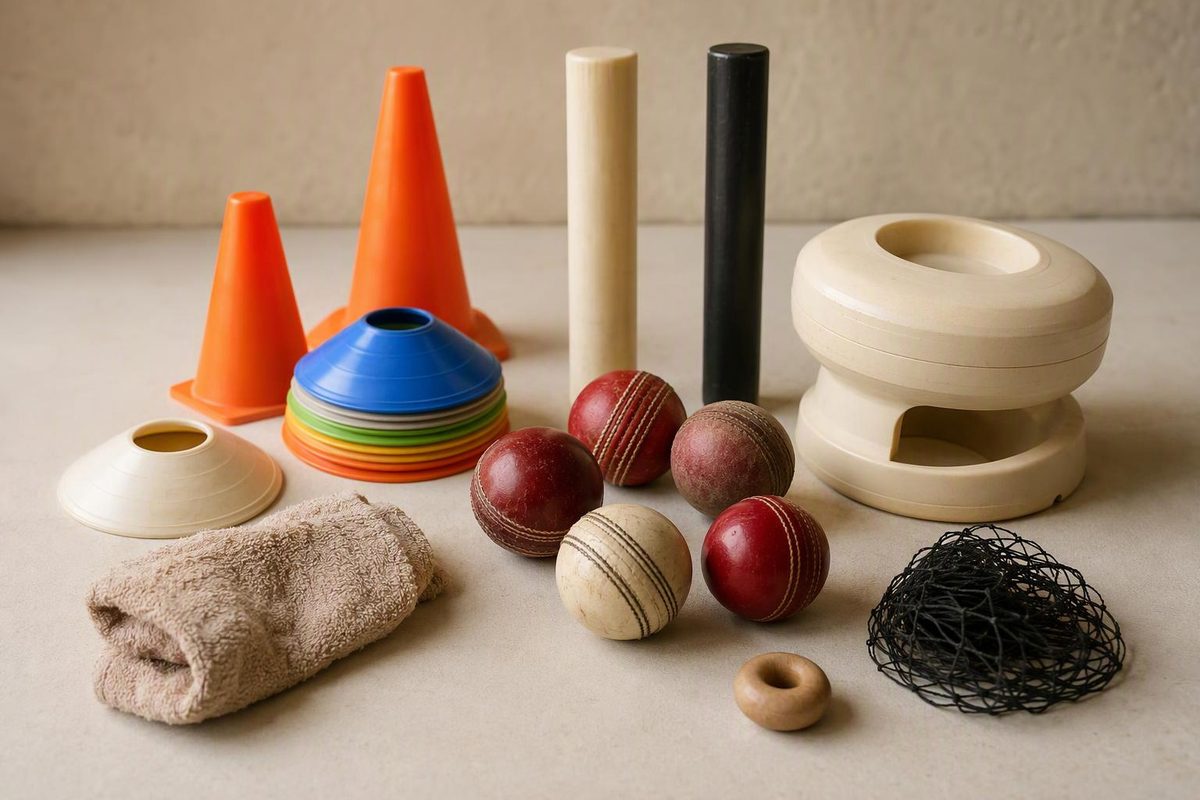
For under-12 cricket following the ECB’s December 2018 junior-format recommendations, the pitch length is 18 yards: 54 feet, or approximately 16.46 metres, stump to stump. Wiltshire Cricket’s published pitch-length table also lists that distance for its U12 cricket.
This is the cricket answer—not a baseball or softball pitching distance. Before setting up a match or practice, check the rules for your competition and season rather than relying on the “12U” label alone.
Why you might see 19 yards instead
The ECB junior-format recommendations, issued in December 2018, list 19 yards for U13, with a separate note specifying 18 yards for U12. A young player’s age does not necessarily identify the format they are playing: if their team enters an U13 competition, look up that competition’s pitch length.
Ask the team manager for the playing conditions and confirm:
- Which age-group competition is this fixture in?
- What pitch length does its rulebook specify?
- Where will the shortened wicket and crease markings be placed?
Use that confirmed distance for match-length practice.
Measure between wickets, not popping creases
For an 18-yard setup, use a tape measure to place the centres of the two middle stumps approximately 16.46 metres apart. Do not measure 18 yards between the popping creases—the forward crease lines at each end.
In standard crease markings, the back edge of each popping-crease line is 4 feet—approximately 1.22 metres—in front of the stump line. The bowling crease runs through the stumps. Cricket Victoria’s pitch-marking guide shows these reference points.
If you move portable stumps to shorten a practice pitch, mark the corresponding creases too. Leaving the old full-length markings in place makes it harder to practise a consistent front-foot landing.
A 12-ball spin-control check
Once you have confirmed the distance, try this simple practice block. Use a soft practice ball in a clear lane, without a batter.
Setup: Place a flat landing target about one metre long and half a metre wide. Choose the length you intend to bowl, and record the target’s distance from the striker’s stumps so you can repeat the setup.
Action: Bowl 12 deliveries with your stock ball—your normal off-break or leg-break—not a mixture of variations. Keep your usual grip and use one release cue: spin the ball out of the hand rather than merely pushing it towards the target.
Record: For every delivery, note:
- Target hit, short, full, left or right; record both directions for a miss that is, for example, short and left.
- Whether the release felt normal or forced.
Your checkpoint is whether you can reach the target area without forcing the release. Keep the target fixed for the whole block; change only one thing before the next block. For a more detailed way to separate misses, use these line-and-length bowling drills.