
10U Pitching Distance: The Under-10 Cricket Answer
Under-10 cricket uses a 17-yard pitch in ECB junior formats. Check your competition’s rules, measure correctly, and try a 12-ball spin-control drill.
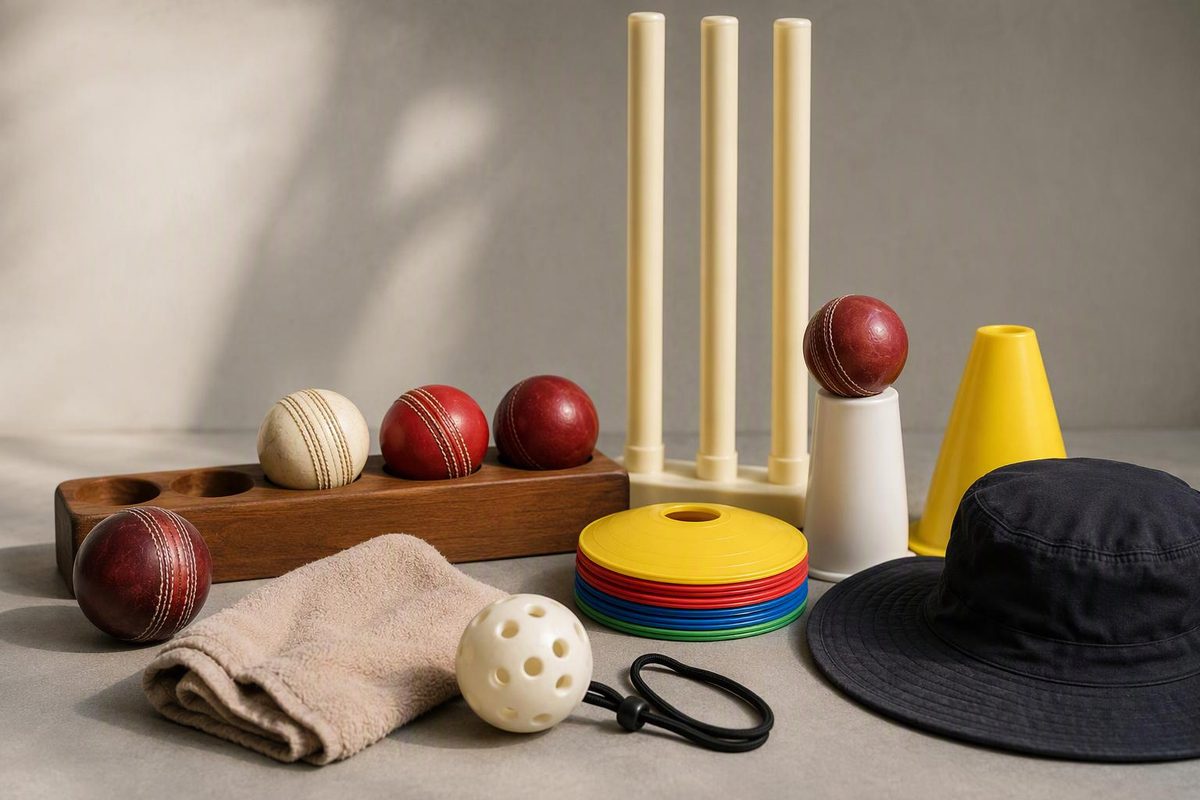
For under-10 cricket following the England and Wales Cricket Board’s (ECB) junior-format recommendations, the pitch length is 17 yards: 51 feet, or approximately 15.54 metres, between the wickets. The handbook, introduced for the 2019 season, rounds this to 15.5 metres and recommends the same length for under-11s. ECB junior-format recommendations
If you mean 10U baseball or softball, check your competition’s pitching rules instead. The measurements and practice setup below apply to cricket only, where the relevant measurement is called pitch length.
Check the competition before marking the pitch
There is no worldwide under-10 cricket distance. MCC Law 6 gives the standard pitch length as 22 yards but explicitly leaves junior pitch lengths to the governing body in the country concerned. MCC Law 6
For a concrete local example, Wiltshire Cricket lists 17 yards for U10 and U11, applying its junior lengths across school, youth-league, district and county cricket from December 2018. Wiltshire Cricket pitch lengths
Before a match or match-distance practice, confirm:
- Which age group and format the player is actually playing.
- The pitch length in that competition’s current rules.
- Whether the session uses a hard or soft ball and what protective equipment is required.
A player’s age alone does not establish the match setup.
Measure the pitch—not the ball’s flight
For a 17-yard setup, measure between the two wicket positions. Do not put 17 yards between the popping creases—the lines in front of the wickets.
The ECB setup diagram shows portable stumps and a new crease line when shortening an existing full-length pitch. Under the standard crease layout, each popping crease sits 4 feet/1.22 metres in front of its bowling crease. Follow the competition’s setup instructions rather than simply using the existing adult markings. ECB setup diagram · MCC Law 7
The quoted pitch length is not a fixed release-to-batter distance: that depends on the bowler’s release position and where the batter stands.
A 12-ball control check for a junior spinner
Once the correct distance is marked, try this simple practice—not a match rule:
- Set up: Use a soft practice ball, no batter, and a clear lane with adult supervision. Mark a flat, one-metre-square landing target, centred roughly three metres in front of the batting-end stumps. This is a starting practice target, not a universal “good length”.
- Bowl: Deliver two sets of six with your familiar stock ball—your normal off-break or leg-break. Keep the grip unchanged and use one cue: finish balanced, facing the target.
- Record: Count target hits out of 12. For each miss, note whether it was short, full, left or right; a delivery can miss in both length and direction. Note any loss of balance separately.
- Check: Look for the most frequent miss. Keep the pitch distance and target fixed for the next block so the scores are comparable. If balance is the main problem, simplify the approach before adding a variation.
For a more detailed scorecard, use the line-and-length bowling drills.