
The Evidence Behind Connolly’s Straighter Spin Action
What changed in Cooper Connolly’s left-arm spin action, what remains unknown, and a 36-ball drill for testing one posture cue without copying blindly.
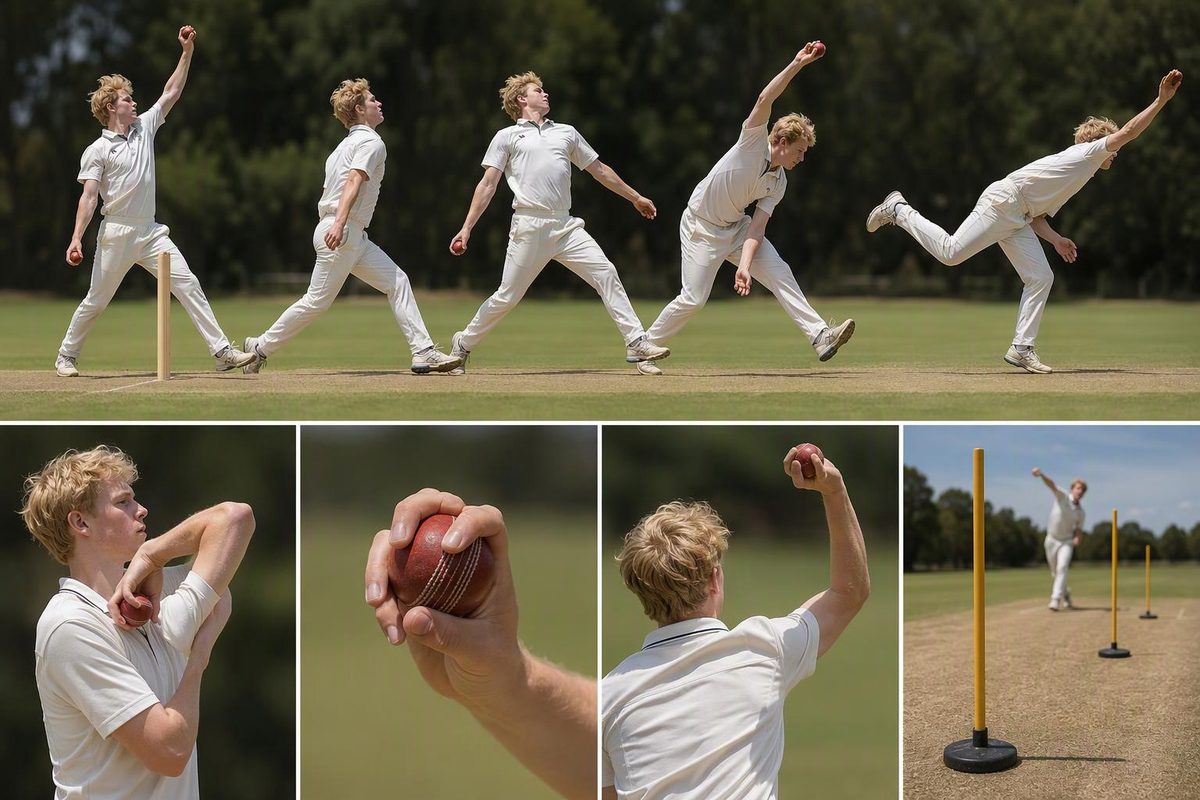
Cooper Connolly’s “new” bowling action is a small technical refinement, not a complete rebuild. After five months without bowling because of back trouble, the Australian left-arm spinner returned against Zimbabwe in Harare on 15 September 2026 with a slightly tweaked action: AAP reported that he kept his body straighter to place less strain on his back. No public account confirms a new grip, release, run-up or spin axis.
Enter your 12-ball baseline and cue totals; the checker compares control and flags when not to keep the change.
Posture Cue Checker
Use totals from the first two 12-ball blocks. A blank entry remains unknown; it is not counted as zero.
Optional release and balance checks
Method: three 12-ball blocks from the drill on this page. Action context: AAP and ICC reports cited in the article.
What “Straighter” Does—and Does Not—Mean
The reported adjustment concerns Connolly’s body position through the action. “Straighter” could mean less sideways bending or folding, but neither Connolly nor reports published by 30 September 2026 supplied measurements or enough technical detail to identify the precise movement.
Three points are known:
- He had a five-month break from bowling because of his back.
- His returning action was only slightly altered.
- He planned to increase his number of overs gradually rather than resume a full workload immediately.
Connolly took 1-23 from four overs on his return in Harare. That performance shows the adjusted action in competition, but one spell cannot reveal exactly what changed mechanically or whether the same adjustment would help another bowler.
The ICC’s account also says Connolly made technical adjustments while building confidence and workload. He spoke about returning to what he trusts and knows. During matches, his attention shifts away from technical points and towards dismissing the batter, limiting boundaries and creating pressure.
For a self-coached spinner, that separation is useful: investigate mechanics in practice, then compete with a simple tactical intention.
A Straighter Position Is Not a Universal Fix
A straighter-looking body position is not automatically safer or more effective for every bowler. Connolly’s adjustment followed his own back issue and was made within a professional programme. The reporting does not establish that a spinner with a different action, physical history or source of discomfort should copy it.
Do not force your spine rigidly upright. Spin bowling still requires a coordinated approach, delivery stride, rotation and follow-through. An exaggerated attempt to “stay straight” can make the action stiff and disrupt release timing.
If your action causes back pain—or changing it produces pain—stop bowling and seek an assessment from an appropriately qualified clinician and an in-person coach. The drill below is for pain-free bowlers examining whether sideways collapse affects repeatability. It is an observation drill, not rehabilitation.
Run a 36-Ball Posture-and-Control Test
The test compares your normal action with one restrained posture cue. It then removes the cue so you can check whether technical work transfers into a competitive task.
Set Up the Test
- Use your normal stock ball, not a variation.
- Mark a generous landing gate about one metre long and one metre wide on your intended line.
- Place a phone behind the bowler’s end, outside the run-up and return path, and far enough back to capture the approach, release and follow-through.
- Bowl at normal practice effort.
Use one cue only: stay naturally tall through release. This is deliberately different from trying to imitate an assumed Connolly position.
Block 1: Record Your Normal Action for 12 Balls
Bowl without a posture cue. Record balls 1, 6 and 12.
After every delivery, note:
- target hit: yes or no;
- clean stock-ball release: yes or no;
- balance after release: stable or falling away.
This block is your baseline. Do not correct the action halfway through it, even if an early delivery feels poor. Changing the cue would make the comparison less useful.
Block 2: Add the Cue for 12 Balls
Use “stay naturally tall through release” before starting the approach. Keep your grip, intended pace and target unchanged.
Record balls 1, 6 and 12 again. If the cue makes you stiff, sharply reduces your spin or causes discomfort, abandon it rather than trying harder. A target-hit improvement does not outweigh pain or a clear deterioration in release quality.
Enter the target-hit totals from Blocks 1 and 2 in the checker above. The optional fields let you compare clean releases and balanced finishes as well.
Block 3: Compete for 12 Balls
Remove the technical cue. Set a simple match task: deny a boundary option on one side of the wicket, or hit the gate often enough to build pressure.
This follows the distinction in Connolly’s comments. Technical work belongs in practice, while match bowling should centre on the batter and the desired outcome. If the movement only works while you consciously hold a posture, it is not yet ready to take into a match.
For a broader approach and delivery-stride session, use this spin-bowling footwork drill.
Judge Repeatability Rather Than One Good Delivery
Compare the two sets of three clips rather than selecting the delivery that looks best. Review the same points in each clip:
- Did the cue produce a repeatable change, or only one unusually upright delivery?
- Did target hits improve, remain similar or decline?
- Did clean stock-ball releases hold up?
- Could you finish balanced without forcing the position?
A useful cue should improve or preserve control while allowing a clean release and balanced finish. The checker can compare your delivery counts, but it cannot judge spin rate, stiffness or the movement visible on video.
Keep testing the cue only if the movement becomes more repeatable without pain and without a clear loss of spin or control. Repeat the test in another session before changing your action permanently. A gradual trial also fits the publicly reported approach to Connolly’s return: technical adjustment alongside a controlled increase in bowling workload.
The lesson from Connolly’s return is not that every spinner should stand straighter. It is that a small adjustment can be developed away from competition, introduced with a gradual workload and judged against the bowler’s real task: challenging the batter and building pressure.