
The 2026 Bowling-Action Change Is About Reporting, Not a New Elbow Limit
The ICC approved Hawk-Eye support for suspect-action reporting in 2026. The 15-degree elbow-extension limit remains. What club spinners need to know.
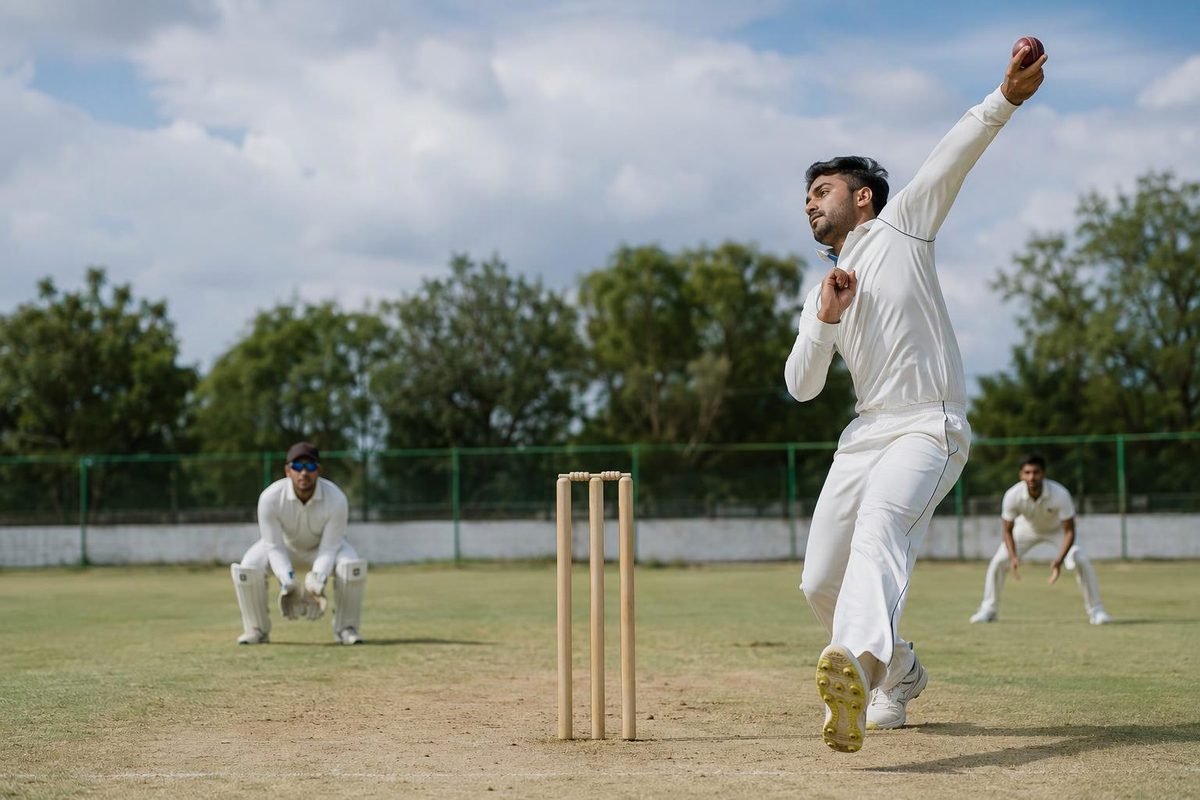
The 2026 change concerns how officials identify a suspect action—not a new elbow-extension limit. As of 12 November 2026, the ICC has approved access to Hawk-Eye data for match officials considering whether to report an illegal bowling action. Its published definition still sets the threshold at more than 15 degrees of elbow extension, measured from the bowling arm reaching horizontal until ball release. (ICC Board decision, ICC action definition)
What Hawk-Eye changes—and what it does not
The ICC’s general action guidance describes officials in international cricket using their eyes and cricketing experience to decide whether an action should be reported. The Board’s new approval adds access to Hawk-Eye data at that reporting stage. It does not announce a different tolerance for elbow straightening or say that Hawk-Eye automatically declares a bowler illegal. (ICC guidance, Board announcement)
Keep these two decisions separate:
- Reporting a suspect action: officials identify a concern requiring assessment.
- Finding an action illegal: the ICC’s published overview describes testing at an accredited centre, supervised by human-movement experts. If testing finds the action illegal, the overview says the bowler is suspended from bowling until the action is modified and a further test is passed. (ICC testing process)
A report is therefore not the same as a confirmed illegal action.
Did the change start on 1 October 2026?
Do not confuse the MCC Laws’ commencement date with a confirmed Hawk-Eye rollout date. MCC’s new Laws edition came into force on 1 October 2026. The ICC Board release separately lists adoption of the remaining MCC changes effective on that date and approval of Hawk-Eye access for action reporting. It does not give a separate start date or detailed rollout arrangements for the Hawk-Eye measure. (MCC announcement, ICC Board release)
The announcement confirms approval—not that every competition began using it on 1 October.
What this means for a club spinner
There is no new ICC elbow allowance to build into your action. Also, 15 degrees measures straightening during the specified delivery phase, not simply how bent your elbow looks in one photograph. A still image cannot establish how much extension occurred between horizontal and release. (ICC definition)
If someone raises a concern about your action:
- Ask which delivery caused it: your stock ball or a particular variation.
- Keep a record of the concern and representative clips at normal bowling effort. Use them to show a coach what happens, not to award yourself a “legal” angle from phone footage.
- Ask your club or league which reporting and assessment procedure applies. Do not assume an ICC technology approval means your local match has that system available.
For a repeatable filming setup, use the spinner’s video checklist. Keep technical review separate from formal clearance.