
Cricket Training for Kids: Build a Session Around Play
Plan a 35-minute children's cricket session with soft-ball batting, bowling and fielding games, simple checkpoints and ability-based adjustments.
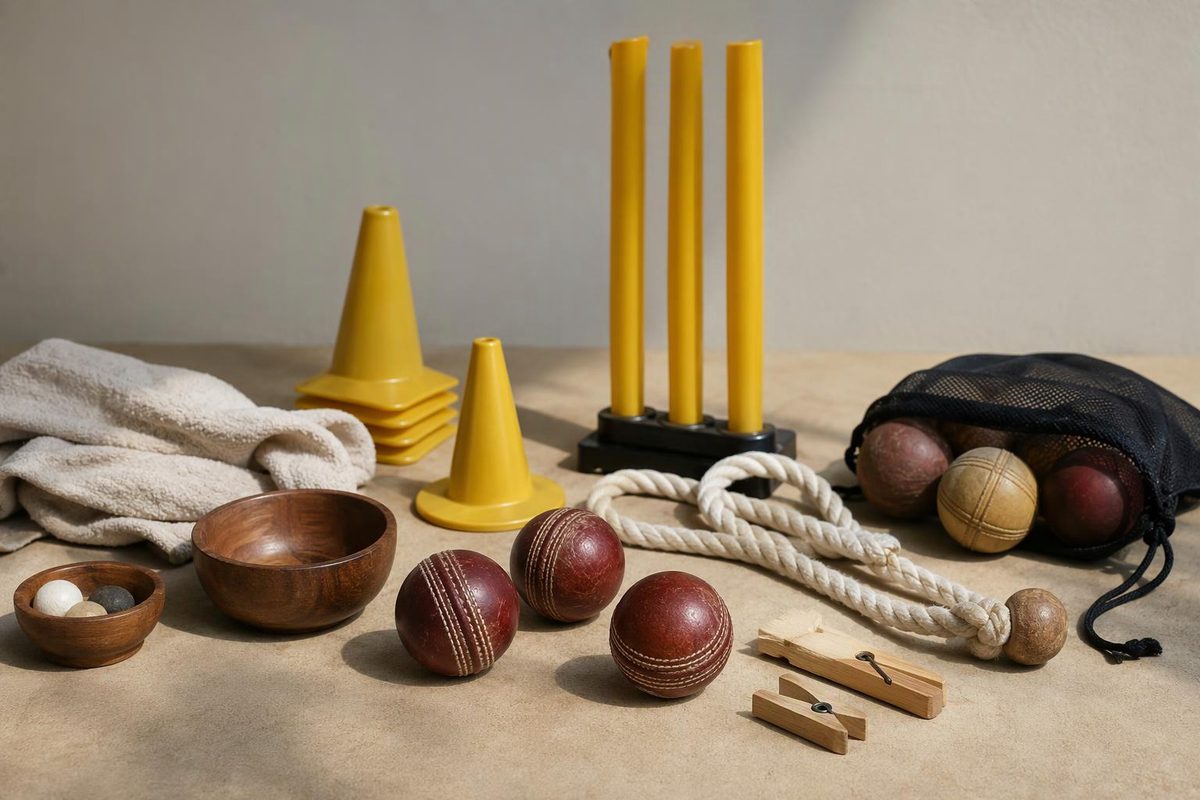
Cricket training for kids should give every child chances to bat, bowl, field and make decisions—not spend most of the session waiting in a net queue. Start with soft equipment, short activities and targets they can reach without straining. Change the challenge to suit the child, rather than asking every child to copy an adult session.
The plan below is a suggested 35-minute soft-ball session for an adult supervising one to four children. Its timings include swapping turns; shorten activities to allow breaks. The timings and scores are coaching choices, not age-group rules or medical workload limits.
Choose the starting level, not just the age
Age helps you find a suitable programme; confidence and ability help you choose the activity. In England and Wales, ECB All Stars Cricket introduces ages 5–8 through movement skills, soft balls and plastic bats. Dynamos Cricket, for ages 8–11, retains soft balls while adding more game play. The ECB notes that a hesitant eight-year-old beginner may be better suited to All Stars.
Use those stages as context, not rigid training prescriptions:
| Child’s current starting point | Suitable challenge | First adjustment if it is too difficult |
|---|---|---|
| New or hesitant player | Roll and stop a ball; hit from a batting tee; bowl towards a large target | Move closer or demonstrate again; try a larger soft ball for gathering |
| Confident soft-ball beginner | Gentle catches, moving-ball batting and short-distance bowling | Slow the feed or enlarge the target |
| More experienced junior | Choose a scoring gap, call a run and bowl towards a smaller target | Remove one added demand rather than restarting everything |
This ability-based approach matches the Australian Sports Commission and Cricket Australia school coaching guidance, which recommends adjusting equipment, space and rules, keeping instructions brief and minimising waiting time.
Set up before children start
You need a few soft balls, a light child-sized bat, cones, stumps or another visible target, and a batting tee if available. A foam or plastic bat is a suitable starting choice.
- Check the surface, equipment and surrounding hazards.
- Mark a waiting area outside the batter’s swing and away from the hitting direction. Keep fielders well back from the batter.
- Use only one active batter at a time in this small-group setup. Keep unused bats on the ground.
- Stop play before collecting loose balls. Nobody bowls or feeds until everyone is clear.
- Keep water available and pause or shorten the session when needed.
Direct supervision, safe spacing and equipment matched to children’s size and ability are central to the ASC/Cricket Australia safety guidance.
Do not turn this into an informal hard-ball session. Arrange hard-ball practice through a junior club with appropriate supervision and protective equipment. In England and Wales, ECB helmet guidance requires under-18s to wear a helmet with a faceguard or grille when batting against a hard ball in matches or practice; its recreational safety guidance recommends helmets tested against the ball size being used. Elsewhere, check the local governing body’s requirements.
A 35-minute session
1. Move and handle the ball — 5 minutes
Walk or jog between cones, change direction, then practise rolling and gathering a ball with a partner. Allow walking throughout if that suits the child.
Cue: “Watch the ball into your hands.”
Checkpoint: Can the child gather the ball and return it deliberately, rather than rushing? Demonstrate once, then let them try. Avoid stopping everyone for each mistake.
2. Stop and return — 6 minutes
Start partners about three metres apart. One rolls a soft ball towards the other, who stops it and rolls it back through a one-metre cone gate. Swap after six attempts.
Cue: “Get behind the rolling ball.”
Record: Returns through the gate out of six.
Move closer if stopping or returning is difficult. For a confident child, roll slightly to either side or narrow the gate—not both at once. If ready for catching, replace the roll with a gentle underarm feed; allow a bounce first if needed.
3. Hit through a gap — 7 minutes
Put a wide cone gate several metres in front of the batter. Use a tee first, or have the adult deliver gentle underarm feeds from outside the bat’s reach, with enough distance to react to a return hit. If the space does not allow safe feeding and fielding positions, stick to the tee. Give each child six attempts before swapping.
Cue: “Watch the ball until the bat meets it.”
Record: Contacts out of six. For a confident hitter, also count balls through the gate.
If moving-ball contact is rare, return to the tee. Once contact is comfortable, offer two scoring gates and let the child choose a gap. Do not add a harder feed and a narrower target together.
4. Bowl to a generous target — 6 minutes
With no batter present, mark a broad landing zone using flat markers. Choose a short distance from which the child can bowl overarm comfortably. Take turns in six-ball blocks.
Cue: “Bring your bowling arm over the top, then keep moving towards the target.”
Record: First bounces inside the zone out of six. Shorten the distance if the child strains to reach it.
A child interested in spin can use their familiar stock ball—their normal delivery—but does not need variations here. For a separate spin-focused practice, use the under-10 spin session.
5. Play a short game — 9 minutes
Use these simplified practice rules:
- The adult feeds; children rotate batting and fielding roles.
- Each child faces four playable feeds, even if dismissed.
- Score one point for contact and another for hitting through a gate.
- If space permits, add a short marked run after contact. Practise calling “yes” or “no” and carrying the bat low.
For one child, the adult feeds and fields. For hesitant players, retain tee batting. Keep the same safe spacing and stop-to-collect routine as in the batting activity. The purpose is participation and decisions, not reproducing every match law.
6. Review — 2 minutes
Ask: “Which activity would you like to try again?” Then write one useful note, such as “Moving-ball batting: 4/6 contacts; keep the same gentle feed.”
Decide what to change next time
Compare each child with their own previous attempt, not a sibling or teammate. Keep the setup unchanged long enough to make the score meaningful.
As a practical checkpoint, try a slightly harder version after four successes out of six across two rounds and comfortable movement. That is a suggested progression rule, not a developmental standard. If success disappears, undo the change.
Keep batting and fielding in the next session even if bowling is the favourite. Stop an activity if it causes pain, and seek appropriate help rather than coaching through it. For children who also bowl pace at school or club, coordinate extra bowling with their coach and the relevant junior workload guidance. The ECB’s fast-bowling guidance addresses bowling workload and rest; this session is not an allowance to add unlimited deliveries.