
How the 2026 High-Looping Delivery Rule Actually Works
The 2026 Laws make deliberate interception of a looping delivery unfair play: Dead ball, five penalty runs, no dismissal, and the ball does not count.
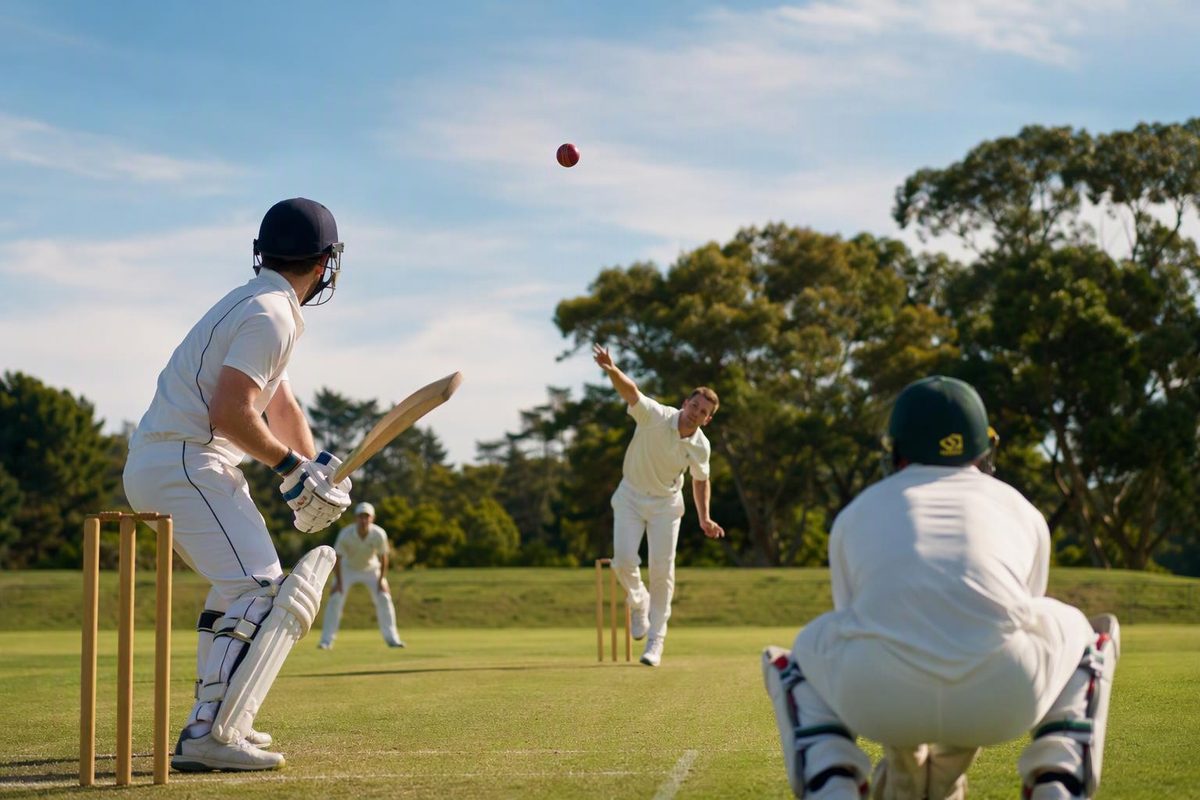
A high-looping delivery is not automatically illegal. From 1 October 2026, the new rule penalises a bowler or other fielder who deliberately intercepts the delivery before the striker has an opportunity to play it. The umpire calls Dead ball, awards five Penalty runs to the batting side, disallows any dismissal and does not count the delivery in the over.
The fourth edition of the 2017 Code takes effect on that date. MCC says it contains 73 material changes (MCC’s announcement). A league or competition may add its own playing conditions, so check the current competition handbook as well.
Choose what happened before the ball reached the striker; the ruling appears beside it.
No Special Offence
A high arc is not automatically illegal. If the ball reaches the striker untouched, apply the usual delivery Laws.
Outcomes From 1 October 2026
| Situation | Ruling |
|---|---|
| High arc, untouched | Usual delivery Laws |
| Deliberately intercepted | Law 41.4; Dead ball and 5 Penalty runs |
| Non-deliberate contact | Law 21.9; No ball and Dead ball |
| No bounce, above waist | Law 41.7 No ball |
Law 41.4 Consequences
Neither batter can be dismissed, the delivery does not count in the over, and the incident is reported. A No ball for an independent reason, such as an overstep, still stands.
Source: MCC 2026 changes summary, Law 41.4 and Law 21.9.
The New Rule Separates Deliberate Obstruction From Contact
MCC considered an example in which a bowler delivered a very high, looping ball and then grabbed it before the batter had an opportunity to play it. Under the new edition, that deliberate action is treated as an attempt to obstruct the striker, rather than merely as a fielder intercepting a delivery (MCC’s summary of the 2026 changes).
The height of the loop is not the offence. The decision depends on whether a fielder deliberately denied the striker the opportunity to play the delivered ball.
| Situation | Decision From 1 October 2026 |
|---|---|
| The ball follows a high arc and reaches the striker untouched | No special offence merely because the arc is high; the usual delivery Laws apply |
| A fielder deliberately catches or stops it before the striker can play | Unfair obstruction under Law 41.4 |
| The ball makes non-deliberate contact with a fielder before reaching the striker | No ball and immediate Dead ball under Law 21.9 |
| The ball reaches or passes the striker without bouncing and above waist height | A separate No ball under Law 41.7 |
The bowler counts as a fielder under the Laws, as does the wicketkeeper (MCC Appendix A.7.3). The rule therefore covers a bowler catching a badly released delivery and another fielder deliberately stopping it.
For a Law 41.4 offence, the umpire calls Dead ball and awards five Penalty runs to the batting side. Neither batter can be dismissed from the delivery, the ball does not count in the over, and the incident is reported.
An independent No-ball reason still applies. If the bowler overstepped before deliberately intercepting the ball, for example, the No-ball call remains alongside the Law 41.4 consequences. These are the established consequences of Law 41.4; the 2026 amendment adds deliberate obstruction of the striker to the conduct covered by that Law (MCC Law 41.4).
Before October 2026, Contact Produces the Law 21.9 Decision
Under the edition applying before 1 October 2026, Law 21.9 supplies the basic result when a delivered ball contacts a fielder before touching the striker’s bat or person or passing the striker’s wicket: the umpire calls No ball and then immediately calls Dead ball (MCC Law 21.9).
The new edition distinguishes ordinary contact from a deliberate attempt to deny the striker the delivery. Deliberately grabbing or stopping the ball can therefore bring the five-run unfair-play sanction rather than only the one-run No-ball penalty.
This does not give a bowler permission to decide that a release was not a delivery. If a ball slips badly or rises much higher than intended, the umpire determines whether it was delivered. The bowler should not catch it and assume the attempt can simply be restarted.
A Ball Above Waist Height Is a Separate No-Ball Question
A looping delivery that reaches or passes the striker without bouncing and above waist height is a No ball under Law 41.7. That decision comes from its height at the striker, not from the highest point of its flight.
Do not confuse the interception amendment with a separate 2026 change for a ball that bounces and then passes above the striker’s head. Under the new Laws, that delivery becomes a Wide rather than a No ball.
Neither amendment bans a spinner from using flight. There is no standalone maximum for the apex of a legal delivery’s arc. The ball must still comply with the other delivery Laws as it reaches or passes the striker.
Spin Bowlers Can Keep Using Normal Flight
Keep bowling a normal flighted stock ball. A high arc by itself does not trigger the new unfair-play rule.
If a release goes badly wrong during a match, do not catch or stop the delivered ball to restart the attempt. Continue the play and leave the decision to the umpire. The umpire may decide that the ball was not delivered and call Dead ball, but that judgement belongs to the umpire.
Build the same habit in practice. Once you release a ball as a delivery, let it complete its path and record the result as a miss. That removes the instinct to grab an obvious error before it reaches the batter.
An 18-Ball Flight-Control Check
- Mark a landing target appropriate to your normal good length. A square about one metre across is a workable starting point.
- Bowl six stock balls with your usual grip, approach and release. Record how many land in the target.
- Bowl six balls with slightly more flight. Keep your normal arm speed and action; use one small trajectory cue rather than scooping the ball or drastically reducing pace.
- Bowl six more at your baseline trajectory.
- Record target hits for each block. Use a side-on phone recording or ask a partner to confirm that the middle block had a visibly higher arc.
Use four target hits from six as a practice checkpoint, not a universal standard. If the higher-flight block falls short, make the trajectory change smaller in the next session. Do not add another variation yet.
The useful skill is repeatable flight to a chosen length, not height by itself. For the underlying technique, see why flight and simply bowling slower are different controls.